
As another Arizona monsoon season approaches, are you looking at the overgrown palm trees in your yard and wondering if they’re a liability? Maybe you’ve seen branches getting a little too close to power lines, or perhaps a thick skirt of dead fronds has you worried about what might happen in the next big storm. If so, you’re asking the right questions at the right time. For homeowners across the Phoenix Metro Area, knowing when to trim palm trees is key to keeping them healthy, safe, and beautiful.
The ideal window for palm tree trimming in Arizona is during the late spring and early summer, typically from late April through June. This timing isn’t arbitrary—it’s a strategic decision based on our unique desert climate that prepares your palms to thrive through the summer heat and survive the powerful monsoon winds.
Why Late Spring is the Perfect Time for Palm Trimming
Palm tree care in the Valley means working with our climate, not against it. Our environment, with its mild winters and scorching summers, dictates a specific schedule for keeping your palms in top shape.
Aligning with the Growth Cycle
Think of your palm tree as an athlete preparing for the marathon of an Arizona summer. As temperatures rise in the spring, palms enter an active growth phase, pushing out new, vibrant green fronds using a wealth of stored energy.
Trimming during this high-energy period allows the tree to heal quickly from the pruning cuts. By clearing away the dead, brown fronds, you help the tree redirect its resources toward new growth and strengthening its core right before the stress of summer heat and monsoon storms kicks in. Proper tree care in Peoria AZ is all about syncing with these natural cycles.
This visual guide breaks down the ideal palm trimming timeline for our unique Arizona climate.
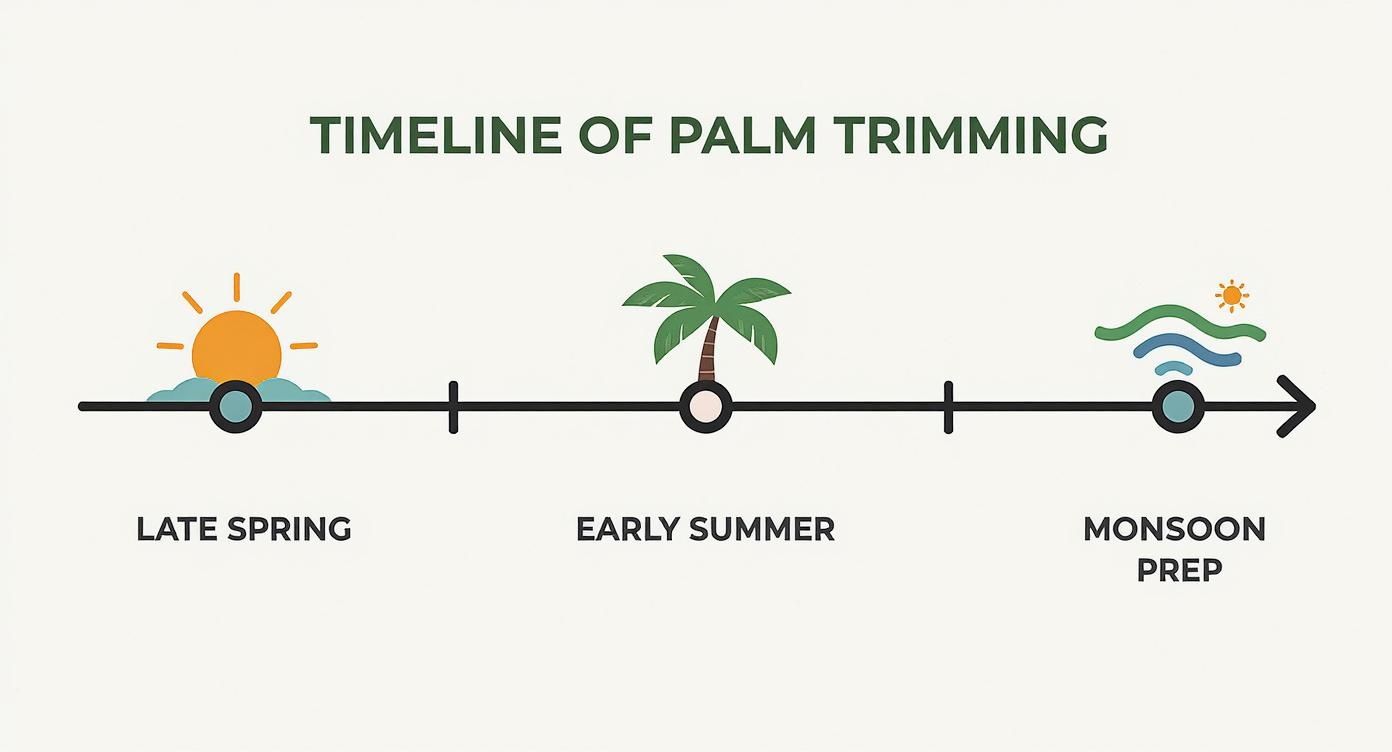
As you can see, the key is to wait until the last frost is long gone but get the job done before the monsoon storms start rolling in. That way, your palm is strong and ready for anything.
Preparing for Monsoon Season
Monsoon preparedness is the other critical reason for trimming in the spring. That heavy skirt of dead fronds isn’t just an eyesore; it becomes a serious hazard when high winds and torrential downpours hit cities like Phoenix, Scottsdale, and Mesa.
A dense, untrimmed canopy acts like a giant sail, catching the wind and putting a massive amount of strain on the trunk. This dramatically increases the risk of the tree snapping or being completely uprooted, which can lead to thousands in property damage.
By scheduling your palm tree trimming Glendale AZ, or wherever you are in the Valley, during May or June, you lighten the load and reduce that dangerous wind resistance. It’s a proactive step that protects your home and preserves the structural integrity of your palm, helping it stand tall through the worst of the storm season.
Arizona Palm Trimming Calendar At a Glance
To make it even simpler, here’s a quick-glance calendar for Valley homeowners. Use this as your guide to know exactly when—and when not—to schedule your palm trimming service.
| Season | Recommended Action | Reasoning for Arizona Climate |
|---|---|---|
| Spring (Late April – June) | IDEAL TIME TO TRIM | The tree is in its active growth phase, allowing for rapid healing before the intense summer heat and monsoon winds arrive. |
| Summer (July – August) | TRIM ONLY IF NECESSARY | Extreme heat can stress a freshly trimmed palm. Only remove hazardous fronds that pose a risk during monsoon storms. |
| Fall (September – October) | AVOID IF POSSIBLE | Trimming too late can remove fronds that would have protected the tree’s core from potential winter frost. |
| Winter (November – March) | DO NOT TRIM | The dead fronds act as natural insulation, protecting the heart of the palm from cold snaps. Trimming now exposes it to frost damage. |
This calendar highlights why that late spring window is so crucial. It’s the perfect balance of timing—letting the palm use its natural energy to heal while getting it structurally sound for the rough weather ahead.
Recognizing the Signs Your Palm Tree Needs Trimming
Your palm tree can’t talk, but it sends clear signals when it needs attention. Learning to read them is the key to catching small issues before they become big problems for your property, whether you’re in Scottsdale or Peoria. Knowing when to trim palm trees isn’t just about the calendar—it’s about responding to your tree’s health.
While late spring is the sweet spot, your palm might show signs it needs help at other times. Keeping an eye out for these cues is crucial for a safe and beautiful landscape.
Signs Your Tree Needs Professional Attention
Think of your palm’s fronds like a traffic light. Green means go—they’re healthy and working hard. Yellow means caution; they’re on their way out. And brown means stop—the frond is dead and it’s time for it to go. Here are common signs you need to call for a professional tree trimming in Sun City AZ:
- A Heavy ‘Skirt’ of Brown Fronds: This is the most obvious sign. A thick layer of dead fronds is not only an eyesore but also a fire hazard and a prime nesting spot for scorpions, rodents, and other pests.
- Yellowing or Discolored Fronds: Once a frond is completely yellow or brown, it’s no longer producing food for the tree. Removing it helps the palm redirect energy to healthy new growth.
- Broken or Dangling Fronds: After a storm, you may see fronds hanging precariously. These are a serious falling hazard and should be removed immediately for safety.
- Heavy Fruit or Seed Pods: Large, heavy stalks of fruit or flowers can create a mess on your patio and attract pests. Trimming them keeps your yard clean and diverts energy back to the tree.
- Fronds Near Your Home or Power Lines: If fronds are touching or getting too close to your roof, windows, or power lines, they need to be trimmed back to prevent damage and safety hazards.
Proactive Trimming for Property Protection
Sometimes, the need for a trim has less to do with the tree’s health and more to do with protecting your home. It’s always better to be proactive instead of waiting for something to go wrong.
If you notice fronds creeping too close to your roof, windows, or power lines, it’s time to act. Over time, they can scrape against surfaces, causing damage or creating a real safety issue. It’s especially important to be aware of this and know how to spot a hazardous tree before the storm hits, as high winds can easily turn those fronds into damaging projectiles. By regularly checking your palms, you can schedule a professional trim at the right time—keeping your trees healthy and your property safe.
The Hidden Dangers of Improper Palm Tree Trimming
When it comes to palm tree care, what you don’t do is just as important as what you do. While grabbing the shears might seem simple enough, the wrong cut at the wrong time can turn a well-intentioned trim into a costly mistake that puts your tree under serious stress.
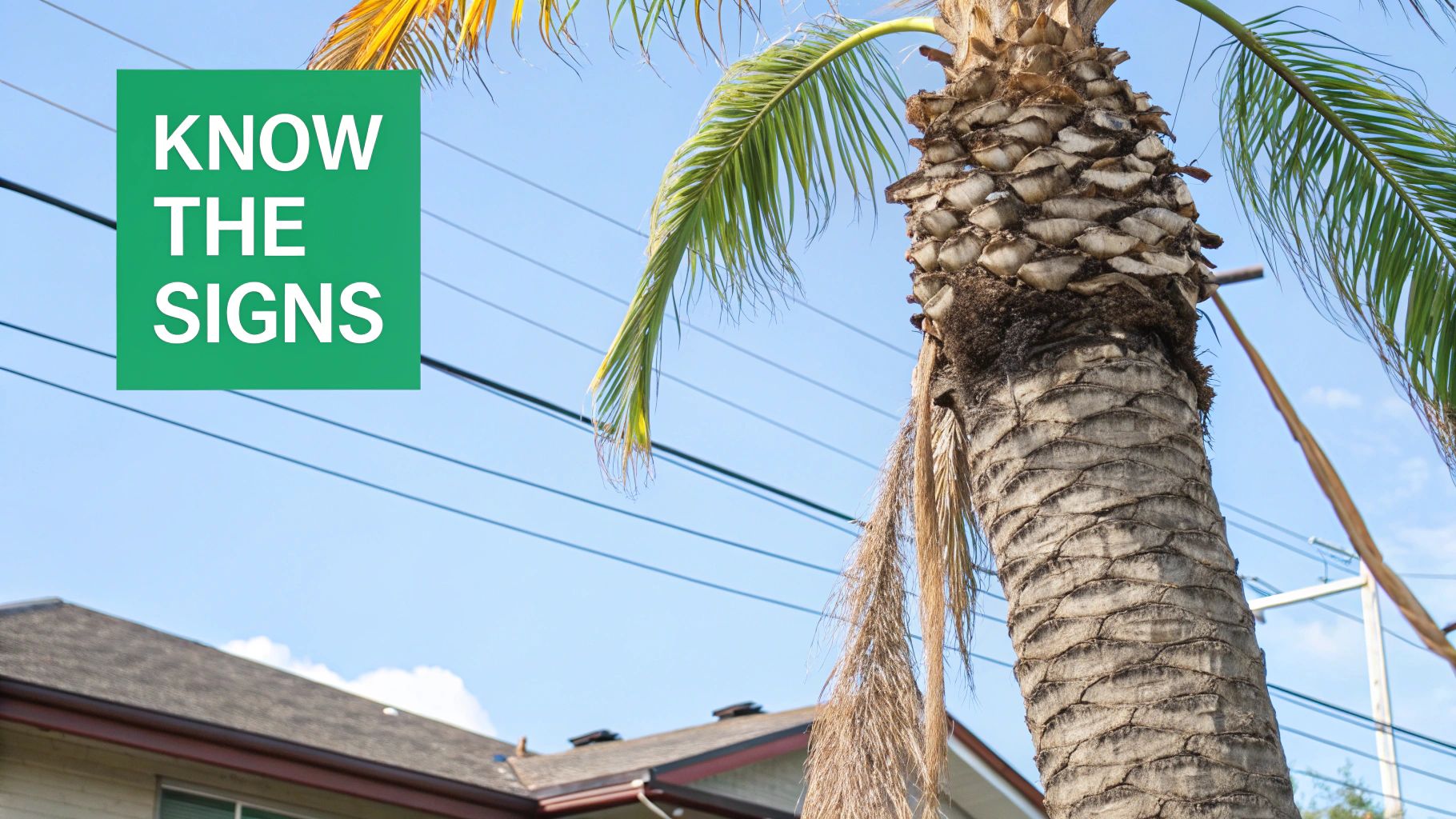
Understanding what to avoid is the first step toward ensuring your palms live a long, healthy life under the Arizona sun.
Why Fall and Winter Trimming Is a Mistake in Arizona
Here in the Phoenix Metro, trimming your palms in the fall or winter is one of the worst things you can do. Those dead, brown fronds might look messy, but during our cooler months, they serve a vital purpose: they act as a natural, insulated blanket.
That “skirt” of old fronds protects the palm’s sensitive heart—the terminal bud where all new growth originates—from potential frost damage. Removing it strips the tree of its only defense against a sudden cold snap, leaving it vulnerable. We see this common but harmful mistake from Sun City to Chandler.
The rule of thumb for Arizona palms is simple: Wait for the warmth. Trimming before the last frost has passed is a gamble that can stunt growth or even kill a perfectly healthy palm.
The Problem with ‘Pencil-Topping’
Another widespread and damaging practice is what arborists call ‘pencil-topping.’ This is a classic sign of an inexperienced trimmer who gets overzealous, cutting away not just the dead brown fronds but healthy green ones, too. They leave just a tiny tuft at the top, which effectively starves the tree.
Green fronds are the tree’s power plant. They’re responsible for photosynthesis, turning sunlight into the energy the palm needs to survive. Hacking them off sends the tree into shock, severely weakening it and making it an easy target for pests and diseases. The risks tied to these improper techniques highlight why this job needs a professional touch. For a deeper look, check out our guide on why DIY tree pruning can be risky.
Steps to Prepare Your Palm Trees for Monsoon Season
Anyone who’s lived through a Phoenix summer knows our monsoon season is no joke. The intense winds and sudden downpours can turn a beautiful, towering palm into a serious hazard almost instantly. Smart, timely trimming is one of the absolute best things you can do to get your trees ready to face the storm.
Your Monsoon Prep Checklist
Getting your palms braced for the powerful winds of July and August is a simple process, but you have to be proactive. Waiting until the storm warnings are flashing on the news is way too late. Here’s what you need to do:
- Schedule a Professional Inspection: In May or June, have a certified arborist from a trusted crew like Shady Deal Tree Service take a look. We can spot weak points and overgrown canopies you might not see from the ground.
- Remove Dead Weight: This is the most crucial step. Clearing out the heavy, brown “skirt” and any large seed pods immediately lightens the load on the crown, making the tree more stable and reducing the “sail effect” that catches wind.
- Avoid Over-Trimming: It can be tempting to ask for a “hurricane cut,” but please don’t. Stripping away healthy green fronds actually weakens the tree and removes the very leaves that protect its core during high winds.
- Clear the Surrounding Area: Before the season kicks off, walk your yard and secure any loose items near your trees. High winds can turn patio furniture and garden decor into dangerous projectiles.
Monsoon preparation is all about balance. The right trim gets rid of the hazards while keeping the palm strong and resilient. It’s your best defense against the unpredictable power of our summer storms.
By following these steps, you can make sure your palms stay an asset to your landscape, not a threat. For a deeper dive, check out our expert tips on how to monsoon-proof your trees, which covers everything you need to know to protect your property this season.
The Benefits of Regular Trimming and Pruning
Consistent, professional palm trimming is not just an expense—it’s an investment in your property’s health, safety, and beauty. The long-term benefits of proper tree care extend far beyond simple aesthetics.
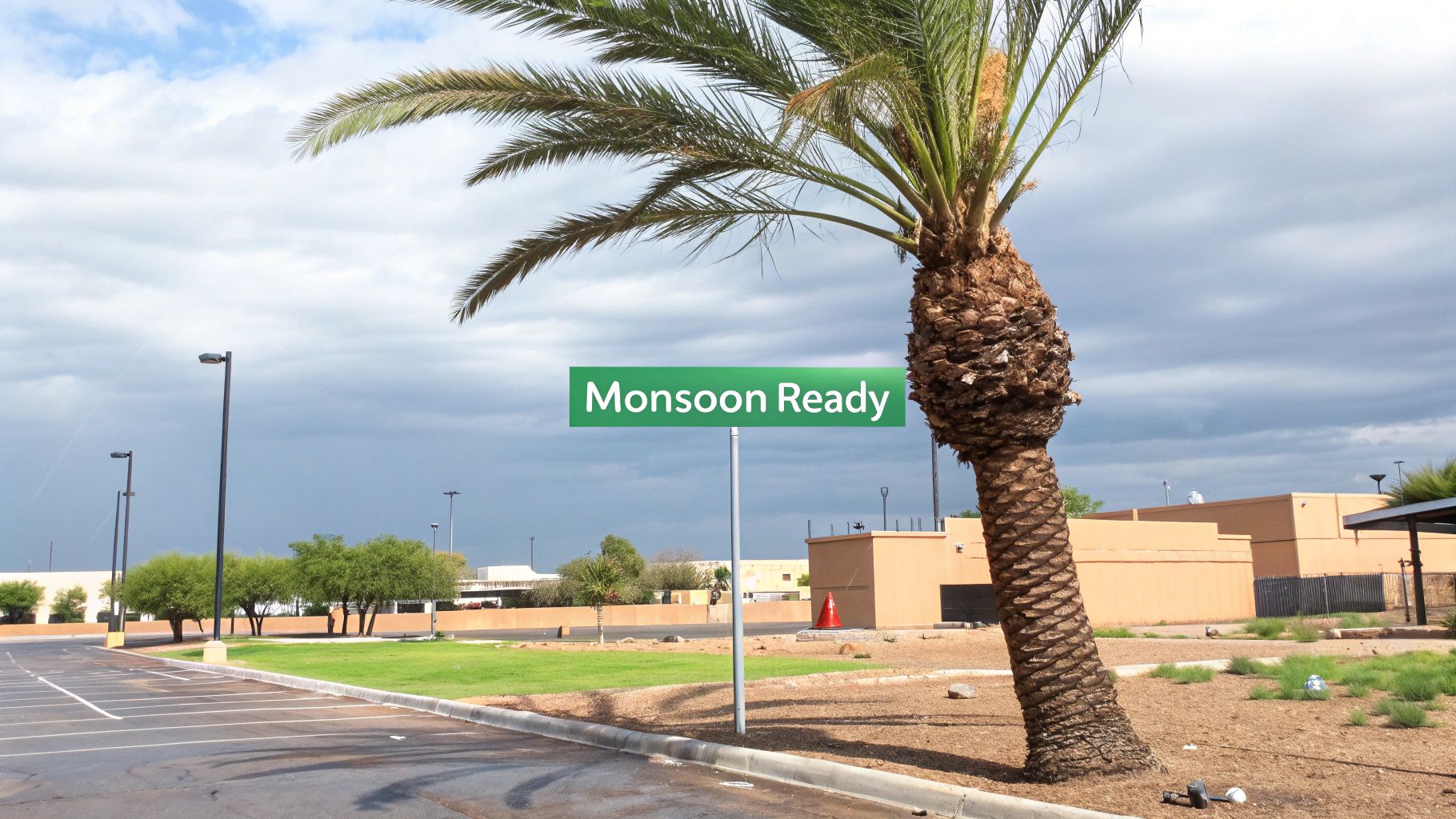
Why Regular Trimming Matters
- Promotes Healthy Growth: When our certified arborists perform a palm tree trimming in Glendale AZ, we help the tree redirect its energy. By clearing away dead fronds, we allow the palm to pour its resources into producing strong, new growth, making it more resilient to pests and diseases.
- Enhances Safety and Reduces Pests: That thick skirt of dead fronds can break off in high winds, becoming dangerous projectiles. It’s also prime real estate for pests like scorpions, rats, and birds. Removing it makes your yard a safer, cleaner space.
- Boosts Curb Appeal and Property Value: A beautifully maintained palm tree is a showstopper for any home in Scottsdale or Sun City. Clean, healthy palms give your property a massive curb appeal boost that translates directly into higher property value.
- Prevents Costly Damage: Proactive trimming prevents falling fronds from damaging your roof, windows, or vehicles. Addressing potential issues before a storm hits is far more affordable than emergency tree removal in Scottsdale AZ after the fact.
It helps to think about home maintenance as a complete package. For instance, understanding the value of hiring residential window cleaners works on the same principle as professional palm care—both services protect your investment and make your home shine. You can learn more about how regular tree maintenance can save you money in our detailed guide.
Frequently Asked Questions (FAQ)
How often should I trim my palm trees in Arizona?
For most palm varieties in the Phoenix area, an annual professional trim is sufficient. The best time is in the late spring (May-June) to remove dead fronds from the previous year and prepare the tree for monsoon season. Trimming more than once a year is rarely necessary and can stress the tree.
Is it okay to cut green palm fronds?
No, you should avoid cutting healthy green fronds whenever possible. Green fronds are the tree’s source of energy, producing food through photosynthesis. Removing them starves the palm, weakens its structure, and makes it more vulnerable to pests and disease. The only exception is if a green frond poses a direct hazard to property or power lines.
What is a ‘hurricane cut’ and is it good for my palm tree?
A ‘hurricane cut,’ also known as ‘pencil-topping,’ is an aggressive and harmful practice where nearly all fronds are removed, leaving only a small tuft at the top. Despite the name, this severely weakens the palm and removes the very fronds that protect its sensitive growth bud during a storm. We strongly advise against this damaging technique.
Ready to give your palms the expert care they deserve? The certified arborists at Shady Deal Tree Service are here to help. We proudly serve homeowners throughout the Phoenix Metro Area, including Avondale, Buckeye, Carefree, Cave Creek, Chandler, El Mirage, Gilbert, Glendale, Goodyear, Litchfield Park, Mesa, New River, Paradise Valley, Peoria, Phoenix, Scottsdale, Sun City, Sun City West, Surprise, Tempe, and Youngtown.
Call 623-703-2536 or visit shadydealtreeservice.com to schedule your free tree service estimate today.