
Have you ever looked at a beautiful Palo Verde in your front yard and thought it just looks… off? Maybe the leaves are yellowing, or branches that were full last season now look thin and sparse. It’s a common worry for homeowners across the Phoenix Metro Area, especially as we brace for another intense monsoon season. Is it just the Arizona sun, or is something more serious going on with your tree’s health?
This guide is your first step toward becoming a more informed tree owner. As your trusted local tree care experts at Shady Deal Tree Service, we want to empower you to spot the early warning signs of disease. Catching problems early can mean the difference between a simple treatment and a costly, complex tree removal.
How to Tell If Your Phoenix Tree Is Sick
Fortunately, you don’t need to be a certified arborist to perform a quick health check on your trees. Learning to think like one just takes a simple, 5-minute visual inspection. When you regularly check on your trees, you get a feel for what’s normal, which makes it much easier to spot when something’s wrong.
Your 5-Minute Visual Health Check
Start by taking in the big picture from a distance, then move in for a closer look. This top-to-bottom approach ensures you don’t miss any crucial clues. The goal here isn’t to have all the answers, but to observe and gather information that can help you or a professional figure out what’s happening.
Here’s a simple way to break down your quick tree health check into the three key areas you need to inspect.
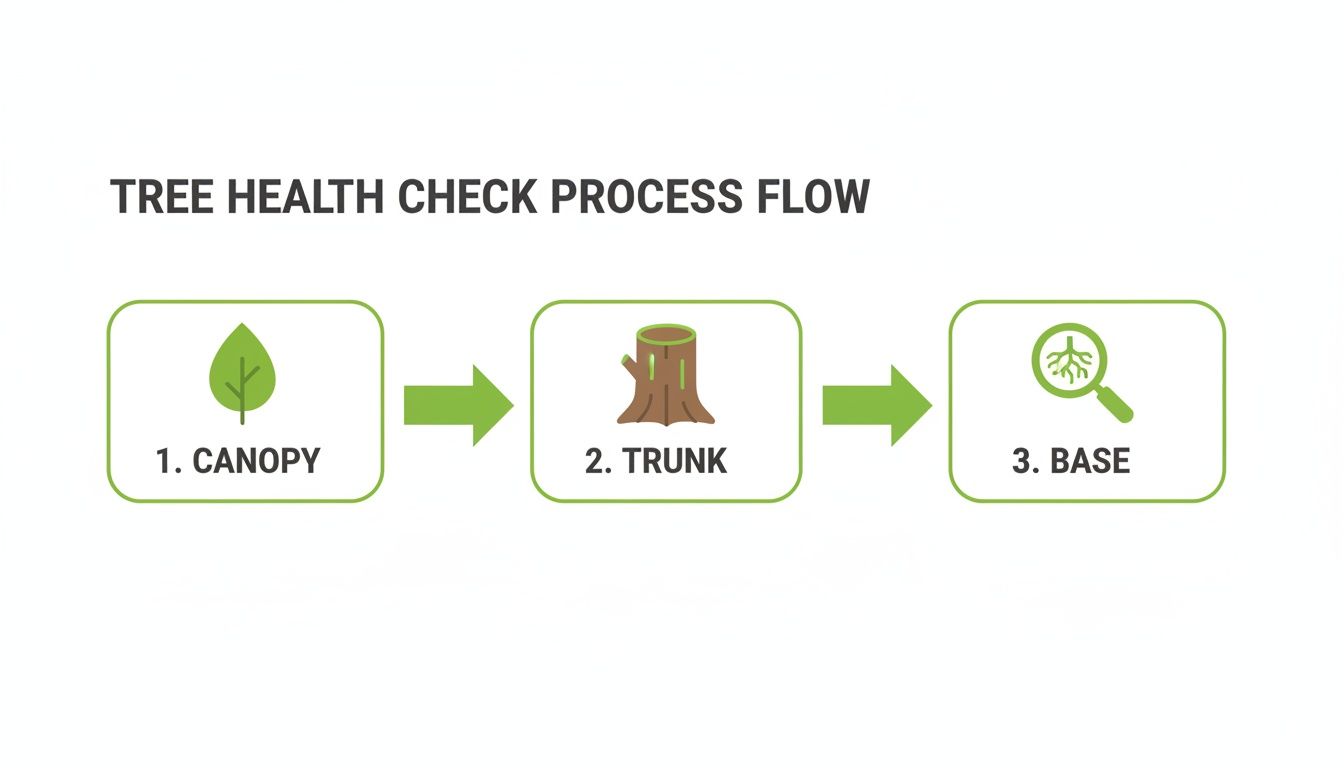
A thorough check means looking at the tree from every angle—canopy, trunk, and base—to get a complete picture of its health.
Signs vs. Symptoms: What’s the Difference?
To really make sense of what you’re seeing, you need to understand two key terms arborists use: signs and symptoms. They aren’t the same thing, and knowing the difference is the first step toward an accurate diagnosis.
- Symptoms are how the tree reacts to a problem. Think of these as the visible expression of distress, like when a person gets a fever. Examples include wilting leaves, yellowing foliage (chlorosis), or entire branches dying off.
- Signs are the physical evidence of what’s causing the disease. This is the “smoking gun” that points directly to the culprit. You might see visible fungal growth (like mushrooms), insect egg masses, or the fine sawdust left behind by boring insects.
Spotting a symptom like a thinning canopy is a great first step, but finding a sign—like a shelf-like fungus growing at the base—gives you a much clearer idea of what you’re dealing with. Catching these issues early is critical for property owners from Peoria to Mesa.
Quick Symptom Checker For Phoenix Trees
| Symptom Observed | What It Could Mean | What to Do Next |
|---|---|---|
| Yellowing or pale leaves | Nutrient deficiency (like iron chlorosis), overwatering, or root damage. | Check your watering schedule and soil drainage. Consider a soil test. |
| Drooping or wilting leaves | Underwatering, extreme heat stress, or root rot from too much water. | Check soil moisture 4-6 inches deep. Adjust watering. |
| Brown, crispy leaf edges | Salt burn from fertilizers or hard water, underwatering, or wind scorch. | Flush the soil with deep watering. Mulch to retain moisture. |
| Thinning canopy or bare branches | Branch dieback from disease, pest infestation, or environmental stress. | Look for signs of pests or fungi on the affected branches. |
| Cracks or peeling bark | Sunscald, physical damage, boring insects, or fungal cankers. | Inspect cracks for insect holes or sawdust. Avoid wounding the tree further. |
| Mushrooms or fungi at the base | A strong sign of internal root or trunk decay. | This often indicates a serious structural issue. Contact an arborist immediately. |
| Sticky residue on leaves/branches | Sap-sucking insects like aphids are present (this is their “honeydew”). | Look for tiny insects on the undersides of leaves. |
This initial inspection is your first line of defense. Catching a problem early can mean the difference between a simple, affordable treatment and a complex, costly tree removal. For a deeper dive into what makes a tree a potential danger, especially before monsoon season, check out our guide on how to spot a hazardous tree before the storm hits.
A Visual Guide to Common Phoenix Tree Diseases
Alright, you know the basic signs of a sick tree. Now, let’s put a name to the problem. Think of this as your field guide to the most common diseases threatening trees across the Valley, from Peoria to Chandler. Knowing what you’re up against helps you go from “my tree looks sick” to “I think my Palo Verde has root rot.” That shift is a huge step toward getting the right professional help from a trusted tree service in Phoenix AZ.
Our unique desert climate creates the perfect storm for certain fungal and bacterial issues you just won’t see elsewhere. Learning to spot these local culprits is key to protecting your landscape.
Texas Root Rot (Phymatotrichum Root Rot)
This is one of the most destructive fungal diseases we see in Arizona, infamous for its rapid and devastating attack. It’s a soil-borne fungus that assaults the root systems of over 2,000 plant species, making it a major threat to many of our most popular landscape trees.
- Key Identifier: The most dramatic symptom is a sudden, severe wilting of the leaves, usually during the hottest part of summer. The leaves turn brown but hang on tight, staying attached to the tree for weeks.
- Affected Species: Mesquite, Palo Verde, Ash, and many fruit trees are highly susceptible.
- Urgency Level: High. Once you see the symptoms, the tree often dies within days or weeks. Immediate professional consultation is vital, though treatment options are unfortunately limited.
Ganoderma Root Rot
Ganoderma is another aggressive fungus that causes internal decay at the base of the trunk and in the major roots. The scary part? It often goes unnoticed until the tree is so compromised it’s at risk of falling over. This makes it a serious safety hazard, especially for homeowners in Surprise and Goodyear who get hit with strong monsoon winds.
- Key Identifier: The tell-tale sign is a shelf-like mushroom, or “conk,” growing at or near the soil line. These conks are often reddish-brown on top with a white or yellowish underside.
- Affected Species: Very common in Mesquite, Palo Verde, and especially Palm trees.
- Urgency Level: Critical. The presence of a conk means significant internal decay has already happened. This tree should be considered hazardous and needs an immediate risk assessment for tree removal in Scottsdale AZ by a certified arborist from Shady Deal Tree Service.
Sooty Mold and Honeydew
While not a disease itself, sooty mold is a massive red flag for a pest problem. It’s a black, powdery fungus that grows on “honeydew”—a sticky substance excreted by sap-sucking insects like aphids, scale, and whiteflies.
- Key Identifier: Look for a black, soot-like coating on leaves, branches, and even the ground beneath the tree. The affected areas will also feel sticky.
- Affected Species: Citrus, Oleander, Crepe Myrtle, and many other ornamental trees are common targets.
- Urgency Level: Moderate. The mold itself doesn’t directly harm the tree, but it blocks sunlight and screams “pest infestation!” that needs to be handled. You can learn more by reading our guide with the top 5 pest control tips for spring.
Bacterial Necrosis in Saguaro Cacti
Even our iconic saguaros aren’t immune to trouble. Bacterial necrosis is a nasty disease caused by bacteria entering the cactus through a wound—often from frost damage, insects, or even just a physical scrape.
- Key Identifier: Keep an eye out for soft, dark, oozing spots on the cactus’s arms or trunk. The infected tissue decays and releases a dark, foul-smelling liquid.
- Affected Species: Primarily Saguaro cacti, but it can hit other columnar cacti, too.
- Urgency Level: High. If the infection is small and caught early, a professional might be able to surgically remove the diseased tissue. Left untreated, it can spread and kill the entire cactus.
Recognizing these common issues is the first step in smart tree care in Peoria AZ. This guide should give you the confidence to spot trouble early and take the right action.
Reading the Clues on Leaves, Branches, and Bark
Think of yourself as a tree detective. When a tree is sick, it leaves a trail of evidence. Learning to read these signs is the first step to figuring out what’s wrong and getting it the right help. The clues are written all over the tree’s leaves, branches, and bark, and knowing what to look for helps you give us precise information when you call for a professional opinion.
This isn’t about memorizing every possible tree disease. It’s about recognizing patterns. By breaking down your inspection area by area, you can turn a confusing collection of symptoms into a clear story about your tree’s health.
What the Leaves Are Telling You
A tree’s leaves are its most expressive feature and often the first place you’ll spot trouble. They can tell you everything from nutrient problems to fungal attacks or pest invasions.
- Yellowing with Green Veins: This distinct pattern, called interveinal chlorosis, is a classic sign of an iron or manganese deficiency. It’s incredibly common here because our alkaline Arizona soils tend to “lock up” these essential nutrients, making them unavailable to the tree.
- Spots and Powdery Mildew: See distinct, circular spots on the leaves, sometimes with a dark border? Or maybe a white, dusty film that looks like it could be wiped right off? These are tell-tale signs of common fungal diseases like anthracnose or powdery mildew, which thrive during our humid monsoon season.
- Chewed Edges or Skeletonized Leaves: If the edges of the leaves look ragged or you see nothing left but the veins, you’ve got an insect problem. Pests like caterpillars are the usual culprits.
Interpreting Branch and Trunk Symptoms
While leaf issues are easy to spot, problems on the trunk and branches often point to more serious, structural issues. A tree’s bark is its armor; any breach is a potential entry point for disease. This is exactly why proper tree pruning in Phoenix AZ is so crucial—bad cuts create wounds that basically invite trouble in. Proper trimming improves tree health and prevents costly property damage from falling branches.
Common Clues on Bark and Wood
- Cankers: These are sunken, dead areas on the bark that often look dark, discolored, and dried out. Cankers are like festering wounds caused by fungal or bacterial infections that are actively killing the living tissue just beneath the bark.
- Galls: Have you noticed strange, tumor-like growths on the branches or trunk? These are galls, which are the tree’s defensive reaction to irritation from certain insects or bacteria.
- Slime Flux or Oozing: A dark, foul-smelling liquid seeping from a crack or old wound is a condition called slime flux. This is a clear indicator of a bacterial infection brewing deep inside the tree.
- Fine Sawdust: See little piles of fine, sawdust-like material (called frass) at the base of your tree or packed into bark crevices? That means you have boring insects, which tunnel into the wood and weaken the tree’s structure from the inside out.
By learning to spot these specific clues, you move from just knowing your tree is sick to understanding how it’s sick. These details are invaluable, helping a professional from Shady Deal Tree Service arrive with the right tools and a solid plan to get your tree back on track.
When You Need to Call a Certified Arborist
This guide is designed to help you spot trouble early, but some situations are just too risky for a DIY approach. Knowing when to pick up the phone is one of the smartest things a Phoenix homeowner can do. Some symptoms are urgent warnings that a tree’s structural integrity is compromised, and you need an expert eye on it, fast.
Signs Your Tree Needs Professional Attention
If you see any of these signs on your property, from Avondale to Cave Creek, it’s time to stop guessing and get a professional on the line. These aren’t just red flags; they’re signs that a tree could be a serious hazard.
- Large, Dead Branches: Any dead limb thicker than your arm is a major risk, especially if it’s high up in the canopy. These can snap and fall at any moment.
- Fungal Growth on the Trunk or Base: Mushrooms or hard, shelf-like fungi (conks) are a huge warning sign of advanced internal rot that has been silently weakening the tree.
- A Sudden or Worsening Lean: If your tree starts to lean, especially after a monsoon storm, it could signal root failure. Look for heaving soil on the side opposite the lean.
- Deep Cracks or Cavities: Big splits or hollowed-out cavities in the trunk or major limbs are a direct threat to a tree’s stability.
- More Than a Third of the Canopy is Dead: If more than 30-40% of the tree’s crown is dead or losing leaves at an alarming rate, the problem is likely severe.
Why Hire an ISA Certified Arborist?
Hiring an ISA Certified Arborist from a company like Shady Deal Tree Service means you’re getting more than just a guy with a chainsaw. You’re bringing in a trained professional who understands tree biology, soil science, and the specific challenges our desert climate presents. You can learn more about what this important certification means in our guide on what a certified arborist is.
An arborist’s assessment goes far beyond what you can see from the ground, allowing them to diagnose complex issues and recommend the safest, most effective plan—whether that’s a targeted treatment or a high-risk tree removal in Scottsdale AZ.
Your Partner in Phoenix Tree Health
Keeping your trees beautiful and safe is a year-round job, but you don’t have to do it alone. This guide gives you the knowledge to spot trouble early, protecting the trees that add so much value and shade to your property. Proactive care is always smarter—and more affordable—than an emergency call later.
For over 14 years, Shady Deal Tree Service has been the trusted partner for homeowners throughout the Phoenix Metro Area. Our team proudly serves communities including: Avondale, Buckeye, Carefree, Cave Creek, Chandler, El Mirage, Gilbert, Glendale, Goodyear, Litchfield Park, Mesa, New River, Paradise Valley, Peoria, Phoenix, Scottsdale, Sun City, Sun City West, Surprise, Tempe, and Youngtown.
We know this desert climate and what it takes for trees to thrive here. When you call us, you’re getting a team genuinely dedicated to the health of your landscape and the safety of your home.
Benefits of Regular Trimming and Pruning
Regular maintenance from a professional service is one of the best investments you can make in your property. Here’s why it matters:
- Improves Tree Health: Removing dead, diseased, or crossing branches allows for better air circulation and sunlight exposure, reducing the risk of pests and disease.
- Enhances Safety: Professional trimming removes hazardous “widow-maker” branches before they can fall and damage your home, car, or power lines.
- Boosts Curb Appeal: A well-pruned tree has a beautiful, natural shape that enhances your entire landscape and increases property value.
- Stimulates Healthy Growth: Proper pruning encourages strong structural growth and can even lead to better fruit or flower production.
Don’t let a small concern turn into a big hazard. Let our family-owned business give your trees the professional care they deserve.
Frequently Asked Questions (FAQ)
How often should I have my trees trimmed in Arizona?
For most Arizona trees, professional trimming every 1-3 years is ideal. Fast-growing trees like Mesquites may need annual attention, while slower-growing species can go longer. The best time for tree trimming in Sun City AZ and the surrounding areas is typically in the late fall or winter when trees are dormant.
Can a sick tree infect other trees in my yard?
Yes, some tree diseases can spread. Fungal spores can travel through the air or be splashed by rain, while certain root rots can move from one tree to another through the soil. If you suspect a disease, it’s crucial to get a professional diagnosis to prevent it from spreading to the rest of your landscape.
What is the difference between trimming and pruning?
While often used interchangeably, pruning focuses on the health and structure of the tree—removing dead, diseased, or weak limbs. Trimming is more about aesthetics and shaping the tree for a desired look or to provide clearance from structures. A professional tree service in Phoenix AZ like ours performs both to ensure your trees are healthy, safe, and beautiful.
Is it safe to have tree work done during monsoon season?
It’s much safer to prepare before monsoon season arrives. We strongly recommend having your trees inspected and trimmed in the spring to remove any weak or hazardous limbs that could break in high winds. Emergency work during a storm is dangerous and often more costly.
Call 623-703-2536 or visit shadydealtreeservice.com to schedule your free tree service estimate today.