
Has a powerful Arizona monsoon ever left you staring at your yard in disbelief? A massive Palo Verde branch on your roof, or a beloved Mesquite leaning at a terrifying angle—it’s an overwhelming sight. When a storm hits, the first steps you take are critical for your safety and your property’s recovery.
Immediate storm damage tree removal isn’t about firing up a chainsaw yourself. It’s about calmly assessing the scene from a safe distance, documenting the damage for your insurance claim, and calling in a trusted professional to handle the truly dangerous work.
Your First Steps After a Storm Damages Your Trees
The unsettling quiet after a monsoon passes can quickly turn to anxiety when you see the chaos in your yard. It’s a stressful situation, no doubt. But the actions you take in these initial moments are what prevent further damage and, most importantly, keep your family safe.
Your absolute first priority is safety. Stay inside until the storm has completely passed. Once it’s clear, assess the situation from a distance—look out a window or stand in your doorway.
Are there downed power lines? If you see any, assume they are live and stay at least 30 feet away. This is non-negotiable. Call your utility company immediately and let the pros handle it.
Document Everything
Before a single branch is moved, grab your phone. Take extensive photos and videos of the damage from every possible angle.
Get wide shots of your entire property to show the full scope, then get close-ups of specific damage—the branch on your roof, the cracked fence, the dent in your car. This visual evidence is absolutely crucial for your homeowner’s insurance claim. Also, jot down the date and time the damage happened. This simple step can make the claims process go so much smoother.
Storm damage is a major reason for tree removal across the globe. Between 2001 and 2024, the United States lost over 1.6 million hectares of tree cover due to urban expansion and natural disturbances like storms. It’s a sobering reminder of just how often homeowners face these exact challenges.
Resist the DIY Urge
It’s tempting to grab a chainsaw and start cutting, especially if a limb is blocking your driveway. Please, don’t.
Storm-damaged trees are incredibly unpredictable. A branch that looks stable could be under thousands of pounds of tension, and one wrong cut can cause it to snap back violently or send the trunk shifting in a dangerous direction.
Learning how to spot a hazardous tree before the storm hits is great for prevention, but post-storm cleanup is a job for trained professionals who have the right safety gear, insurance, and heavy-duty equipment.
Knowing When to Call a Professional Tree Service
After a monsoon barrels through, the natural instinct is to get outside and start cleaning up. While picking up a few scattered palm fronds is one thing, you have to know the difference between a minor mess and a major hazard. Not every broken branch requires professional storm damage tree removal, but some situations are just too dangerous to handle on your own.
So, how do you tell? We’ve seen it all across the Phoenix Metro Area—from Mesquite trees in Peoria with soil heaving up around their base to Ash trees in Scottsdale with deep, structural cracks running right up the main trunk. Those aren’t just cosmetic issues; they’re immediate red flags that demand an expert eye.
This simple decision tree helps visualize the process of evaluating storm damage to figure out your next steps.
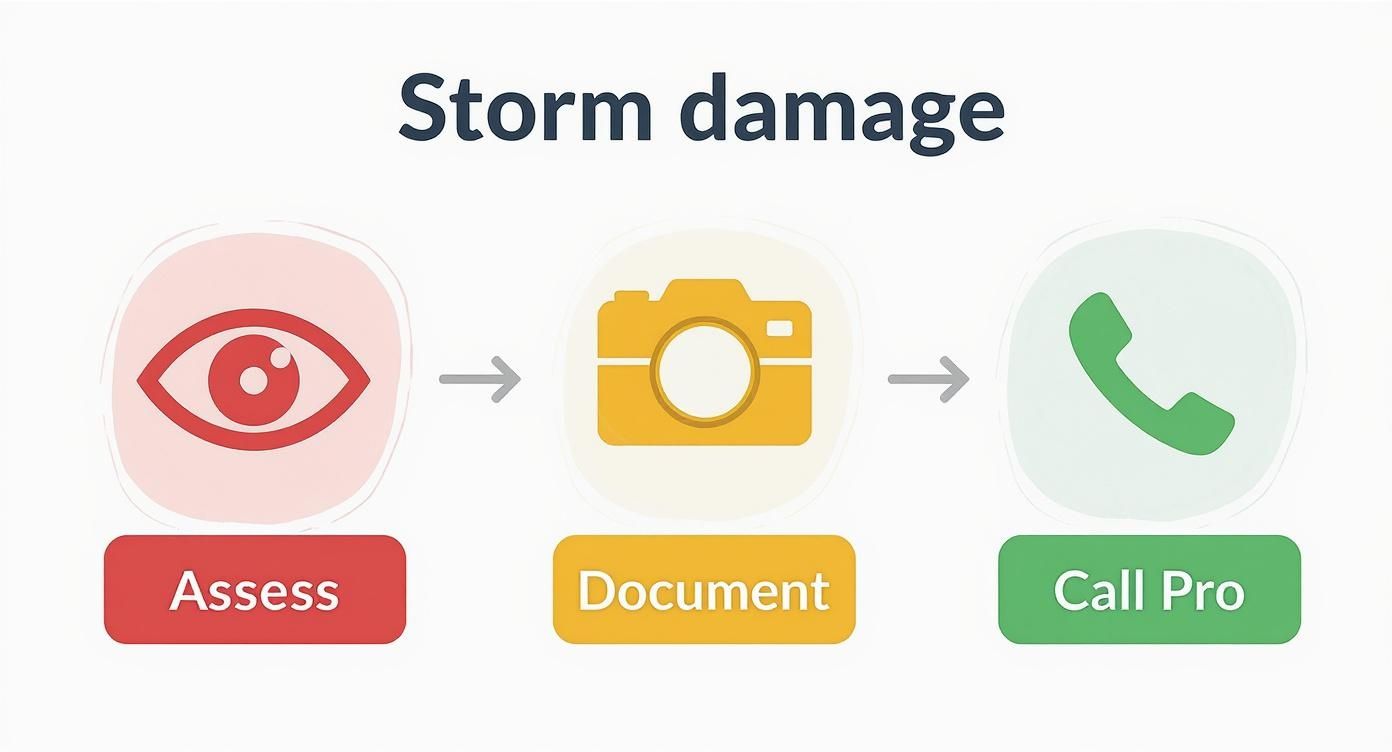
As you can see, your first priorities are always the same: assess for safety, document everything, and know exactly when to pick up the phone and call for help.
Signs Your Tree Needs Professional Attention
Some types of damage are so severe they create an immediate risk to your home, your family, and your property. If you spot any of the following, it’s time to step back and call in a certified team for tree service in Phoenix, AZ.
- Major Hanging Limbs: Any large branch that’s broken but still caught in the canopy is a ticking time bomb. We call these “widow-makers” for a reason—they can fall without the slightest warning.
- A Leaning Tree: If a tree is suddenly leaning, especially toward your house, a neighbor’s yard, or power lines, its root system has likely been compromised. The risk of it toppling over is extremely high.
- Deep Cracks or Splits: Take a close look at the main trunk and where large limbs connect. Deep cracks signal a loss of structural integrity, meaning the entire tree could fail.
- Uprooted or Heaving Soil: See the ground lifted or cracked around the base of your tree? That means the entire root ball is unstable and is a classic sign of impending failure.
To help you make a quick call, here’s a table outlining common damage scenarios and what to do.
Quick Guide to Assessing Tree Damage
Use this reference to quickly identify the risk level of common tree damage scenarios and determine the right course of action.
| Symptom of Damage | Potential Risk Level | Recommended Next Step |
|---|---|---|
| Small, broken branches on the ground | Low | Safe for homeowner cleanup. Wear gloves and eye protection. |
| Large hanging limb (“widow-maker”) | High | Stay clear of the area and call a professional arborist immediately. |
| Tree leaning noticeably | Extreme | Evacuate the immediate area. Call for emergency tree service. |
| Deep cracks in the main trunk | High | This is a structural failure. Call a certified arborist for an assessment. |
| Soil lifted or cracked at the tree base | Extreme | The root system has failed. This is an emergency situation; call a pro. |
When you’re dealing with high or extreme risk situations, remember that the forces at play are immense.
Attempting to remove trees with these issues is incredibly risky. Wood under tension from a storm can snap back with lethal force, and leaning trees can shift in an instant. The safety of your family and property is paramount.
Ultimately, a professional assessment is always the safest bet. You can learn more about why hiring a certified arborist matters in our detailed guide, which breaks down the expertise they bring to these exact kinds of complex situations. When in doubt, let a trained and insured professional handle the risk.
The Hidden Risks of Delaying Tree Removal
After a big monsoon storm, it’s tempting to just want to deal with a damaged tree later. But putting off storm damage tree removal is a gamble you really can’t afford to take. A broken or leaning tree is far more than just an eyesore; it’s a ticking time bomb, and the risks only get worse the longer you wait.
One of the most dangerous myths I hear from homeowners is that if a broken branch didn’t completely fall during the storm, it must be stable enough. That couldn’t be further from the truth. A partially broken limb is under incredible stress and can snap without any warning—weeks or even months later—bringing it crashing down on your roof, car, or fence.
Compounding Problems Over Time
Beyond the immediate physical danger, those open wounds from storm damage are like rolling out the welcome mat for pests and disease. A tree’s bark is its skin. Once it’s ripped open, insects like bark beetles and termites can move right in. Fungi and bacteria are never far behind, leading to rot that can finish off the tree and even spread to other healthy trees on your property.
What starts as one damaged tree can quickly turn into a much bigger, more expensive headache for your entire landscape.
The longer a structurally compromised tree stays on your property, the greater your liability. If that tree or one of its limbs falls and damages a neighbor’s property, you could be on the hook for all the repairs.
This kind of delay can also create a serious mess with your insurance claim. Most policies require homeowners to take reasonable steps to mitigate further damage after an incident. Leaving an obvious hazard standing could be seen as negligence, which might give your insurance company a reason to deny a claim for any new damage that tree causes.
The financial toll of widespread storm damage is just staggering. In the first half of 2025 alone, extreme weather events caused between $93 billion to $126 billion in damages globally, and that number keeps climbing. You can read more about the economic toll of severe weather on livescience.com.
Ultimately, getting a professional out for prompt tree removal Scottsdale AZ is an investment in your home’s safety and value. It takes care of the immediate threat and stops that cascade of secondary problems before they start. The best defense is always a good offense, and our guide on preventative tree care planning can show you how to get ahead of these situations in the future.
How to Choose a Reputable Emergency Tree Service
After a monsoon, the Valley seems to flood with “tree guys” knocking on doors and offering quick fixes. When you’re stressed and staring at a downed tree, it’s easy to make a choice you’ll regret. But hiring the wrong person can lead to shoddy work, more property damage, or even outright financial scams.
Your goal here isn’t just to find someone with a chainsaw—it’s to find a reliable partner. A truly professional storm damage tree removal service brings the right experience, insurance, and equipment to handle the job safely and efficiently. Making a calm, informed decision right now will save you countless headaches down the road.
Vetting Your Tree Service Checklist
Before you let anyone start work on your property, run through this quick but essential checklist. Asking these questions is the fastest way to separate the real pros from the opportunists.
- Are you licensed, bonded, and insured? This is non-negotiable. Ask for proof of both general liability insurance (to cover your property) and worker’s compensation (to cover their crew). Without it, you could be held liable for any accidents that happen on your property.
- Can you provide a detailed, written estimate? A professional quote should clearly outline the scope of work, the equipment they’ll use, and the total cost. Vague, verbal agreements are a major red flag.
- Do you have an ISA Certified Arborist on staff? While not required for every single job, having an ISA Certified Arborist on the team shows a higher level of expertise and a serious commitment to proper tree care.
- What is your cleanup process? Will they haul away all the debris? A reputable company, like Shady Deal Tree Service, leaves your property clean, not with another mess for you to handle.
Common Red Flags to Watch Out For
Storm chasers often rely on high-pressure tactics to get you to sign on the spot. Be wary of anyone who:
- Demands full payment upfront, especially in cash. A reasonable deposit is standard, but you should only make the full payment once the job is completed to your satisfaction.
- Shows up uninvited. Reputable companies don’t typically solicit door-to-door, especially right after a storm.
- Pressures you for an immediate decision. Take your time. Get multiple quotes and check their references. A true professional will understand.
Your home in Scottsdale, Peoria, or anywhere in the Phoenix Metro Area is your biggest investment. Don’t trust its safety to an unvetted, uninsured crew. Taking just a few extra minutes to verify credentials is the smartest move you can make.
Don’t Just React—Prepare for the Next Storm
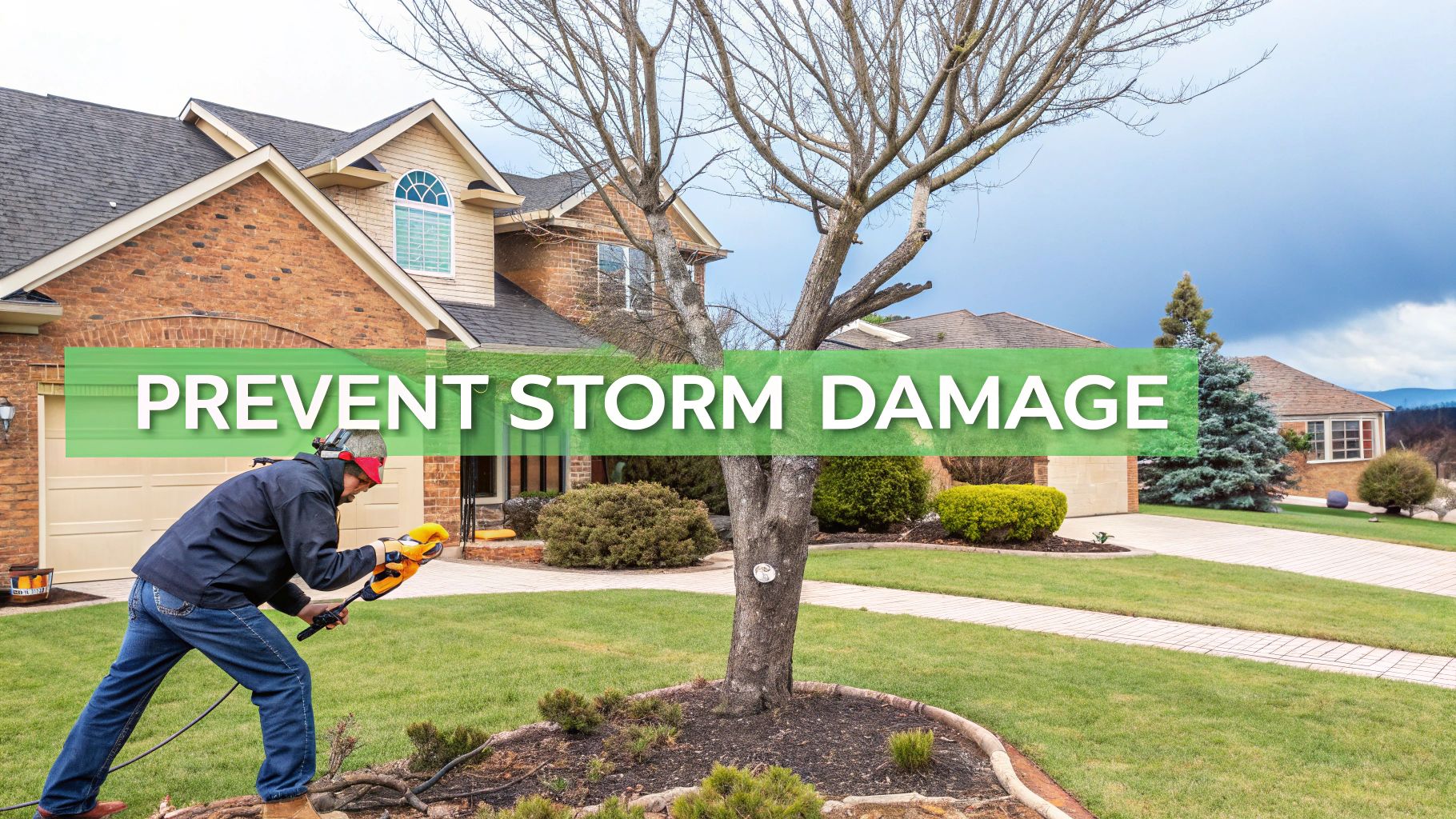
The absolute best way to handle storm damage is to prevent it from happening in the first place. Shifting your mindset from cleanup crew to proactive caretaker is one of the smartest investments you can make for your property. When you strategically prepare your trees, you’re building a landscape that can actually stand up to Arizona’s powerful monsoon season.
Steps to Prepare for Monsoon Season
Proactive tree care makes a huge difference. Here’s what our team focuses on to get your trees ready:
- Canopy Thinning: We strategically remove select branches to reduce the “sail effect.” This allows heavy winds to filter through the canopy instead of pushing against the entire tree, which drastically reduces the strain on the trunk and roots.
- Deadwood Removal: This simple step eliminates the most common source of falling debris. Dead or dying branches are the first to snap in high winds, becoming dangerous projectiles that can damage your home, car, or fence.
- Structural Pruning: For younger trees, this is key. We correct poor growth patterns early on, ensuring they develop a strong, balanced structure that will be more resilient against storms for decades to come.
This forward-thinking approach is more important than ever. With climate shifts intensifying storms, even healthy forests are under threat from events that cause widespread tree mortality. Storms don’t just cause immediate physical damage; they also stress trees, leaving them vulnerable to pests and diseases down the road. You can learn more about the global drivers of forest loss on wri.org.
Proactive tree care in Peoria AZ isn’t an expense—it’s an investment. The cost of a professional trim is a drop in the bucket compared to the thousands you could spend on emergency storm damage tree removal and property repairs.
By taking these steps, you’re not just tidying up your yard; you’re actively defending it against the next big storm. For more detailed strategies, check out our guide on how to monsoon-proof your trees with expert tips from certified arborists. A little bit of planning today makes all the difference tomorrow.
Frequently Asked Questions (FAQ)
After a storm rolls through, the questions start piling up almost as fast as the debris. We hear the same concerns from homeowners all over the Valley, from Glendale to Gilbert, so we’ve put together some straightforward answers to help you navigate the cleanup.
How much does storm damage tree removal cost in Phoenix?
The honest answer is: it depends. The cost varies based on the tree’s size, its location, and the complexity of the job. A tree tangled in power lines or leaning over a roof requires specialized equipment and carries more risk, which affects the price. We always provide a clear, free estimate upfront so you know exactly what to expect.
Will my homeowners insurance cover tree removal?
Most of the time, yes—but it comes down to your specific policy. Generally, insurance covers removal if a tree falls on a covered structure like your house, garage, or fence. If it falls in an open yard without hitting anything, coverage may be limited. Always document the damage with photos and call your agent right away.
What happens to the stump after the tree is removed?
Our standard process for storm damage tree removal is to cut the tree flush with the ground, which removes the immediate hazard but leaves the stump. Many homeowners prefer a cleaner look and opt for stump grinding. We can discuss the pros and cons of stump grinding versus full removal to find the best solution for your yard.
Which areas do you serve?
Shady Deal Tree Service proudly serves homeowners throughout the Phoenix Metro Area, including: Avondale, Buckeye, Carefree, Cave Creek, Chandler, El Mirage, Gilbert, Glendale, Goodyear, Litchfield Park, Mesa, New River, Paradise Valley, Peoria, Phoenix, Scottsdale, Sun City, Sun City West, Surprise, Tempe, and Youngtown. We’re your local experts for everything from palm tree trimming Glendale AZ to tree trimming Sun City AZ.
Your Trusted Partner for Storm Cleanup and Recovery
When a storm leaves your property in chaos, you need a team you can count on. Shady Deal Tree Service is here to help you safely and efficiently handle any storm damage, giving you peace of mind. From emergency tree removal to preventative care that strengthens your trees for the next monsoon season, we are your trusted local experts.
Call 623-703-2536 or visit shadydealtreeservice.com to schedule your free tree service estimate today.