
Have you ever watched a monsoon storm roll in and found yourself worrying about that big mesquite tree looming over your roof? Or maybe you’ve noticed overgrown branches creeping dangerously close to power lines. If so, you’re not alone. For homeowners across the Phoenix Metro Area, preparing our trees for Arizona’s wild weather is a top priority, and it all starts with smart, professional pruning.
Proper phoenix tree pruning is one of the best ways to protect your property. By thinning the canopy and reducing wind resistance, you’re giving your trees the strength they need to stand firm against whatever the storm season throws at them. A professionally pruned tree is structurally sound and far less likely to lose a major limb—or fail completely—when the wind and rain start whipping.
Why Smart Pruning Is Your Best Defense Against Monsoon Damage
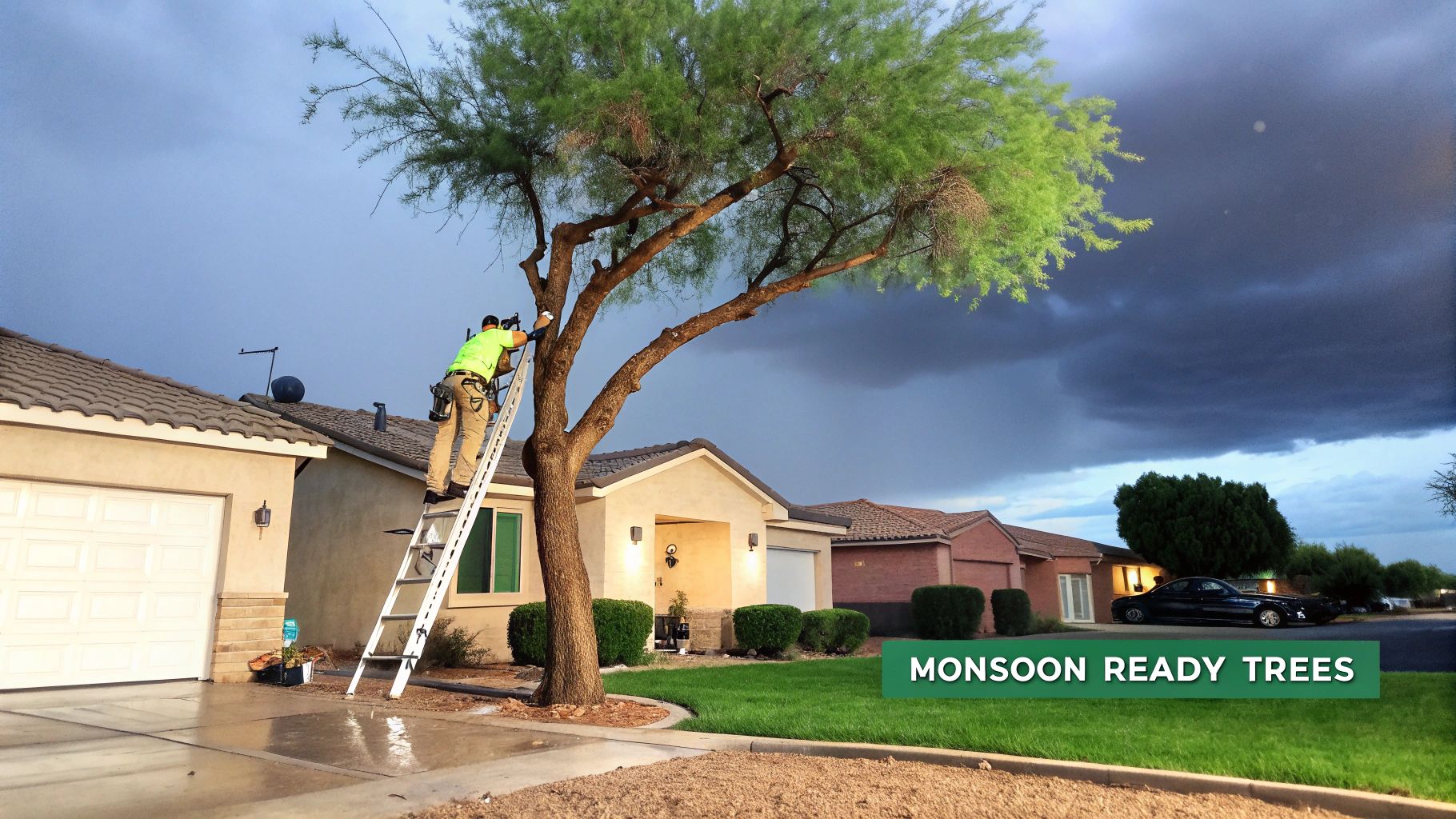
We’ve all seen it happen. The sky darkens over Phoenix, the wind howls, and the monsoon unleashes its power. Too often, that familiar scene ends with the sickening crack of a branch on the roof or an uprooted palo verde blocking the driveway.
This common fear highlights a critical reality of living in the Valley: strategic tree pruning isn’t just about making things look nice. It’s a vital investment in your home’s safety and the long-term health of your landscape. At Shady Deal Tree Service, we believe that proactive care is the key to a safe and beautiful property.
Protecting Your Property and People
Think of professional pruning as preventative maintenance that fortifies your trees against our harsh desert climate. An overgrown, dense canopy acts like a giant sail, catching every gust of wind and putting incredible stress on the branches and trunk.
A skilled arborist knows how to selectively thin that canopy, creating channels for the wind to pass through harmlessly. This simple, proactive step dramatically lowers the risk of storm damage, saving you from costly emergency repairs and keeping your family safe.
Benefits of Regular Trimming and Pruning
While getting ready for the storms is a huge benefit, the advantages of regular, professional pruning are year-round. It’s simply part of responsible property ownership in Arizona.
- Improved Tree Health: Removing dead, diseased, or rubbing branches stops decay from spreading and helps the tree put its energy into healthy growth.
- Enhanced Curb Appeal: A well-shaped tree is a beautiful tree. It adds significant value and a polished look to your property.
- Increased Safety and Clearance: Pruning raises low-hanging limbs over sidewalks, driveways, and roofs, preventing accidents and keeping essential clearance for vehicles and people. You can learn more about how to trim before the storm in our detailed guide.
- Prevents Property Damage: Proactive trimming keeps branches away from your roof, windows, and power lines, preventing costly damage before it happens.
- Promotes Stronger Growth: By removing weak branches, an arborist encourages the tree to develop a stronger, more resilient structure.
From specialized palm tree trimming in Glendale AZ, to large-scale tree removal in Scottsdale AZ, our team serves homeowners across the entire Phoenix Metro Area. We proudly work in Avondale, Buckeye, Carefree, Cave Creek, Chandler, El Mirage, Gilbert, Goodyear, Litchfield Park, Mesa, New River, Paradise Valley, Peoria, Phoenix, Scottsdale, Sun City, Sun City West, Surprise, Tempe, and Youngtown.
The Hidden Costs Of Improper Tree Trimming In Arizona
It’s always tempting to save a few bucks with a DIY trim or by hiring the cheapest person you can find with a chainsaw. But when it comes to tree care in Peoria AZ, a bad haircut can do far more than just look messy—it can set your tree on a path to irreversible decline.
Those quick, improper cuts create large, jagged wounds that are an open invitation for pests and disease. Instead of healing over, these wounds often lead to rot that hollows out a tree from the inside, turning it into a serious liability the next time a monsoon storm blows through.
Sunscald: The Desert Tree’s Sunburn
One of the most common and damaging results of bad pruning here in Phoenix is sunscald. Think of it as a nasty sunburn for your tree’s trunk and major limbs. When an inexperienced trimmer removes too much of the protective canopy at once—a mistake often called “lion-tailing”—the sensitive bark underneath gets blasted by the intense Arizona sun it’s not used to.
This sudden, harsh exposure can literally cook the living tissue just beneath the bark, causing it to crack, peel, and sink. These ugly scars aren’t just cosmetic; they’re perfect entry points for boring insects and fungal diseases that can ultimately kill the tree. Proper pruning is always a delicate balance, making sure the tree keeps its natural sun protection.
The Dangers Of Excessive Crown Manipulation
Another huge risk is what arborists call “excessive crown manipulation.” This is a technical term for when a trimmer gets carried away and removes a massive portion of the tree’s leaves and branches, often in a misguided attempt to make it smaller. You might know it by its more common—and dreaded—name: “topping.”
Topping a tree is one of the worst things you can do. It strips the tree of its ability to photosynthesize, triggers a panic response of weak, flimsy new growth, and basically starves it of the energy it needs to survive our brutal summers.
Financial Risks That Go Beyond The Tree
The consequences of a bad trim aren’t just biological—they’re financial. A weakened, unstable tree is a ticking time bomb. That overgrown mesquite leaning toward the power lines in Mesa or that poorly balanced palo verde hanging over your driveway in Chandler can turn into an expensive emergency in a hurry.
Utility companies will often mandate costly emergency removals for trees that threaten their infrastructure. Worse, a tree that snaps and crashes onto your roof, car, or a neighbor’s property can lead to thousands of dollars in repairs and insurance headaches. Investing in professional, preventative care is always cheaper than reacting to a disaster. You can learn more about how regular tree maintenance can save you money in the long run.
The message is clear: whether you need tree trimming in Sun City AZ or a trusted tree service in Phoenix AZ, proper pruning isn’t an expense. It’s an investment in your property’s safety, beauty, and value.
Your Seasonal Calendar For Pruning Common Phoenix Trees
When it comes to pruning trees here in the Valley, timing is everything. Our desert climate, with its brutal summer heat and mild winters, has its own rulebook for tree care. If you prune a tree at the wrong time of year, you’re not helping it—you’re stressing it out, inviting pests, and potentially sending it into a long-term decline.
Think of pruning as a controlled stress. You want to apply that stress when the tree is most ready to handle it and heal up fast. For most of our trees in the Phoenix Metro, that means putting the saws and loppers away during the scorching summer months from May through September.
Making a bad cut at the wrong time can start a dangerous domino effect.
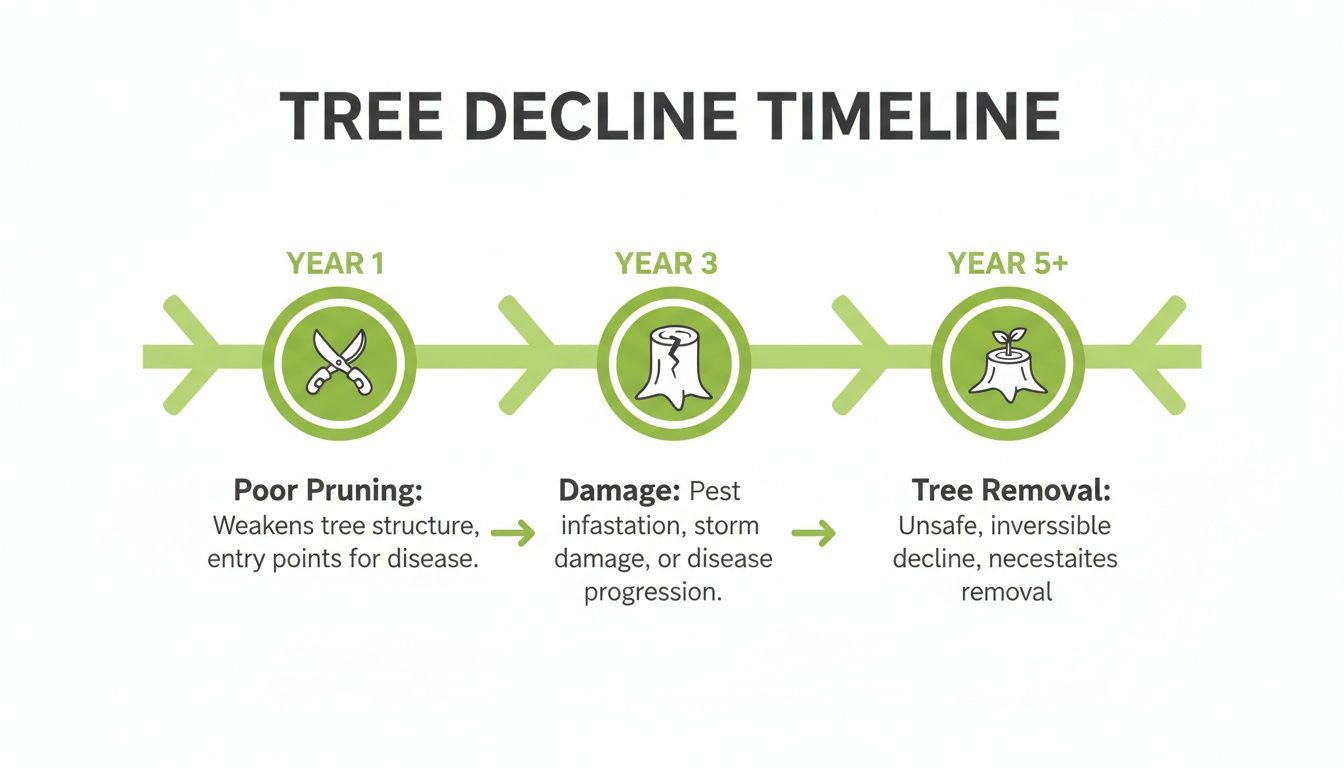
This visual shows exactly how a single mistake—like a severe trim in July—can lead to irreversible damage and, eventually, a costly tree removal. Knowing the right season for each species is your best defense against this. Here’s a quick reference guide for some of the most common trees you’ll find around Phoenix.
| Phoenix Tree Pruning Calendar By Species |
| :— | :— | :— |
| Tree Species | Primary Pruning Season | Reasoning & Key Tips |
| Mesquite & Palo Verde | Late Fall/Winter (Nov-Feb) | The trees are dormant, minimizing shock and the risk of sunscald. This shapes them before spring growth and strengthens them against monsoon winds. |
| Citrus (Oranges, Lemons, etc.) | Late Winter/Early Spring (Feb-Apr) | Prune after the last frost. This lets you remove any frost-damaged wood and shape the tree before it wastes energy on flowering and fruiting. |
| Palms | Late Spring (May-June) | Clean them up right before monsoon season. Remove only brown, dead fronds and heavy fruit stalks that could become hazards in high winds. |
Native Desert Trees: Mesquite and Palo Verde
For our iconic desert trees like Mesquites and Palo Verdes, the sweet spot for pruning is during their dormant period in the late fall and winter—think November through February. Trimming them during these cooler months is a win-win. First, the tree isn’t actively growing, so the shock is minimal. Second, you dramatically reduce the risk of sunscald on newly exposed branches.
Fruiting Trees: Citrus and Others
Citrus trees—oranges, lemons, grapefruit—run on a different clock. They are best pruned in the late winter or early spring, usually from February to April, but with one critical rule: always wait until after the last chance of frost has passed. This allows you to clean up any frost damage from the winter and shape the canopy before the tree pours its energy into making flowers and fruit.
Popular Palms
Palm tree trimming is a whole different ballgame. The goal here isn’t to reshape the tree but to clean it up. You only want to remove the dead or dying brown fronds, fruit stalks, and any hazardous fronds hanging below a 90-degree horizontal line. The best time for this is in the late spring, around May or June, right before monsoon season.
Signs Your Tree Needs Professional Attention
While seasonal timing is key for routine maintenance, some problems can’t wait. If you see any of these red flags, it’s time to call a professional tree service immediately, no matter the season.
- Large Dead Branches: Any branch thicker than your wrist with no leaves is a major falling hazard.
- Cracks or Splits in the Trunk: Deep cracks, especially where large limbs meet the trunk, signal serious structural weakness.
- Branches Touching Your Roof or Power Lines: This is a huge safety risk. Don’t wait for a storm to handle it for you.
- Sudden Leaning: A tree that was once upright and is now leaning could be a sign of root failure.
- Mushroom Growth at the Base: Fungi growing on the trunk or major roots is often a sign of internal rot.
If you spot any of these warning signs, don’t put it off. Our team at Shady Deal Tree Service provides expert evaluations to keep your property safe.
Professional Pruning Techniques Vs. DIY Mistakes To Avoid
Knowing where to make a cut can mean the difference between a tree that thrives for decades and one that struggles to survive. A professional arborist uses specific, science-backed techniques designed to work with a tree’s natural biology. Meanwhile, well-intentioned DIY efforts often lead to harmful mistakes that can cause permanent damage.
Professional Techniques That Promote Health
An ISA Certified Arborist doesn’t just cut—they sculpt. Their work is a blend of science and art, focusing on the tree’s long-term structure. Two of the most important professional methods are thinning cuts and crown raising.
- Thinning Cuts: This is basically decluttering your tree’s canopy. An arborist will selectively remove entire branches all the way back to their point of origin. This opens everything up, letting sunlight and air penetrate deeper, which is crucial for reducing fungal diseases and strengthening the tree against our powerful monsoon winds.
- Crown Raising (or Crown Lifting): Think of this as lifting the tree’s skirt. This technique involves carefully removing the lowest branches to create clearance for people, cars, or your roofline. When done correctly, it improves safety and access without putting the tree’s health at risk.
Common DIY Pruning Mistakes And Why They Hurt Your Trees
In an effort to save a little time or money, many homeowners accidentally make cuts that do more harm than good. Here are the biggest “pruning don’ts” we see all across the Phoenix Metro Area:
- Topping: This is, without a doubt, the most destructive thing you can do to a tree. It involves indiscriminately chopping off the entire top, leaving behind large, ugly stubs. A topped tree panics and sends up a flurry of weak, poorly attached shoots that are far more likely to snap off in a storm.
- Lion-Tailing: This practice involves stripping out all the interior branches, leaving foliage only at the very ends of the limbs. This shifts all the weight to the branch tips, making them top-heavy and prone to snapping. It also exposes the trunk and inner branches to severe sunscald.
- Leaving Stubs (or Flush Cutting): If you make a cut too far from the trunk, you leave an ugly stub that the tree can’t heal over. On the flip side, cutting too close to the trunk (a flush cut) removes the tree’s natural defense zone, the branch collar, creating a massive wound that’s slow to close.
Avoiding these common errors is fundamental. For homeowners who want to dig deeper, you can learn about the long-term benefits of expert tree care in our detailed article.
How To Prepare Your Trees For Monsoon Season
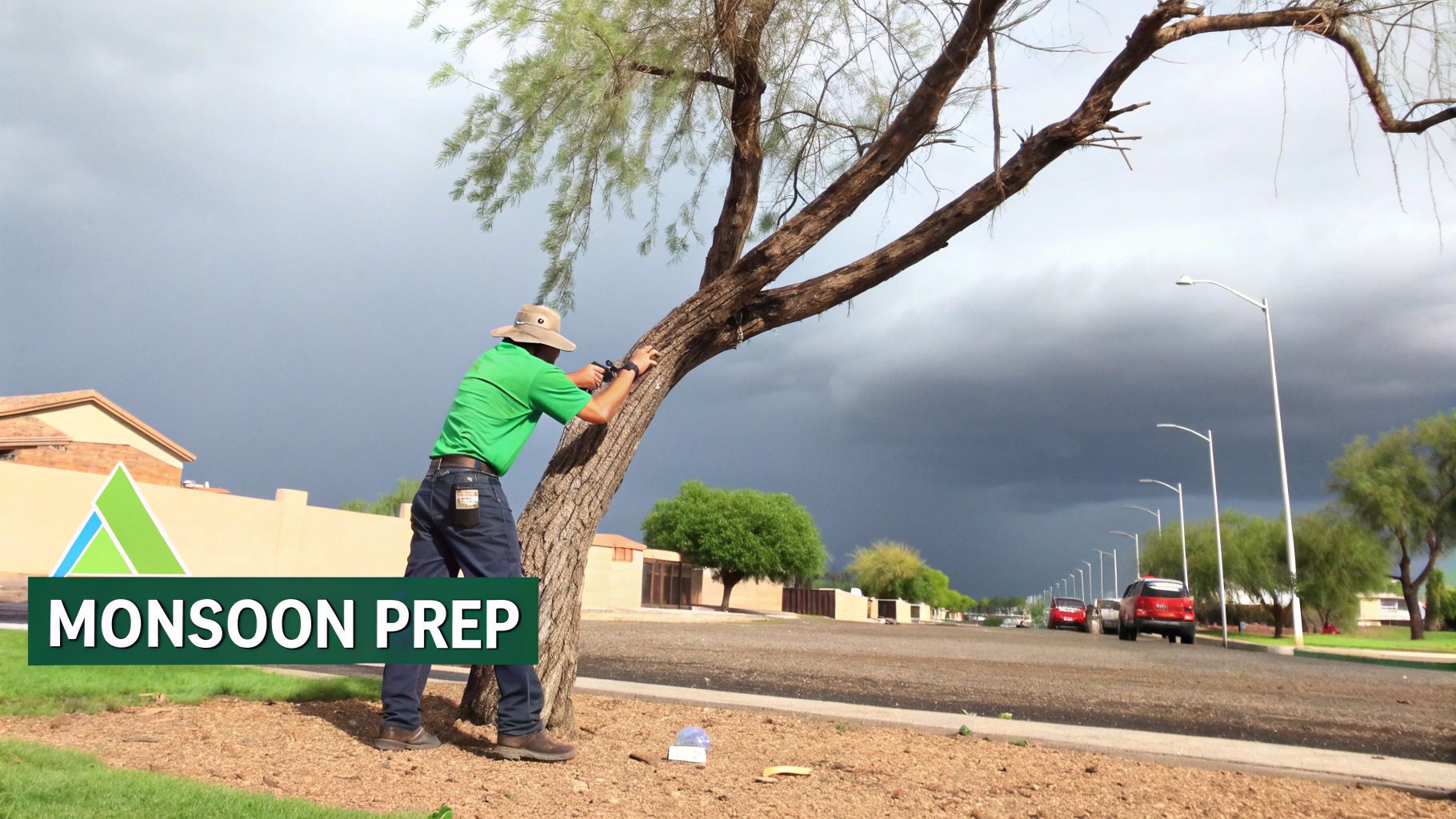
Anyone who’s lived through a Phoenix summer knows that monsoon season is no joke. Those powerful storms bring a welcome break from the heat, but they also unleash ferocious winds that can turn a beautiful tree into a serious liability. Getting your trees ready isn’t just a good idea—it’s a critical part of responsible homeownership in the Valley. The goal is simple: reduce wind resistance so gusts can pass through the canopy instead of pushing against it.
Steps to Prepare Your Trees for Monsoon Season
Before the sky turns dark, it’s time to take a walk around your property and inspect your trees. Catching these issues now means you can fix them on your own terms, not in the middle of a storm at 2 a.m.
- Schedule a Professional Pruning: The single most effective step is to have an arborist thin the canopy. This reduces the “sail effect” and allows wind to pass through harmlessly.
- Identify and Remove Deadwood: Look for any branches that are dead, broken, or weak. These are the first to become dangerous projectiles in high winds.
- Check for Structural Weaknesses: Inspect the trunk and major limbs for cracks, splits, or signs of disease. These are red flags that the tree may not be stable enough to withstand a storm.
- Clear an Area Around the Base: Move patio furniture, cars, and other valuables away from the “fall zone” of large trees before a storm is forecast.
- Ensure Proper Irrigation: A healthy, properly watered tree is more flexible and resilient. Avoid over-watering, which can destabilize the root system, but make sure your trees aren’t drought-stressed.
Spotting these problems is the first step to protecting your home. For a more in-depth guide, you can check out our expert tips on how to monsoon-proof your trees. Proactive tree trimming is far more than an aesthetic choice—it’s a crucial investment in preventing costly repairs, maintaining essential services, and keeping your community safe.
Integrating Pruning Into A Complete Landscape Health Plan
Expert Phoenix tree pruning is a huge part of a healthy, beautiful landscape, but it’s just one piece of a much larger puzzle. Think of your yard as its own little ecosystem. A single, well-pruned tree is a great start, but its long-term health depends on everything around it—the soil it grows in, the water it gets, and the other plants it competes with.
At Shady Deal Tree Service, we believe in looking at the whole picture. Pruning is most effective when it’s part of a complete landscape health strategy. This means we look beyond a single branch and consider the entire environment. A truly thriving landscape needs a coordinated effort.
- Proper Watering and Irrigation: Even the best pruning job can’t save a tree that’s chronically dehydrated. We help design water-wise irrigation systems tailored to the unique needs of your desert landscape.
- Soil Health and Nutrition: The compacted, alkaline soil common across the Phoenix Metro Area can be tough on trees. Proper care might involve aeration or targeted fertilization to ensure roots can access the nutrients they need.
- Strategic Tree Selection: Choosing the right tree for the right spot is fundamental. We advise on species that will thrive in your specific location, preventing future headaches.
This integrated view ensures your investment in professional pruning pays off for years to come. For homeowners looking to plan ahead, our guide on how preventative tree care can help you avoid costly removals can help build a strong foundation for your landscape from day one. A healthy landscape isn’t the result of a single service, but a continuous partnership in care. It’s about creating an environment where your trees are set up for success from the roots up.
Frequently Asked Questions About Phoenix Tree Pruning
How often should I trim my trees in Arizona?
For most mature shade trees like Mesquites or Palo Verdes, a professional trim every 3-5 years is sufficient to maintain their health and structure. Faster-growing or younger trees may benefit from a light pruning every 1-2 years to guide their growth. The best schedule depends on the specific tree, so an arborist’s assessment is always recommended.
What is the average cost for tree trimming in Phoenix?
The cost of tree trimming varies based on the tree’s size, location, and overall condition. A small, easy-to-access tree might cost a few hundred dollars, while a large, complex job requiring special equipment could be over a thousand. We always provide free, detailed estimates so you know the exact price before any work begins.
When is the best time of year to prune trees in Phoenix?
The ideal time for structural pruning for most desert trees is during their dormant season in the late fall and winter (November to February). This minimizes stress and the risk of sunscald. However, removing dead, broken, or hazardous branches is a safety priority and can be done at any time of year.
Can pruning my tree too much kill it?
Yes, excessive pruning, especially a harmful practice called “topping,” can severely damage or kill a tree. Removing too much of the canopy at once starves the tree of its ability to produce food, exposes it to sunscald, and invites pests and disease. This is why hiring an ISA Certified Arborist who understands proper pruning techniques is so important.
Ready to give your trees the expert care they deserve? The ISA Certified Arborists at Shady Deal Tree Service are here to help homeowners across the entire Phoenix Metro Area, from Scottsdale and Peoria to Chandler and Sun City. We are proud to be your local experts in everything from routine maintenance to emergency tree services.
Call 623-703-2536 or visit shadydealtreeservice.com to schedule your free tree service estimate today.