
Is that skirt of brown, drooping fronds on your palm tree looking a little unruly, especially with monsoon season on the horizon? For homeowners across the Phoenix Metro Area, knowing exactly when to prune palm trees is key to keeping them healthy, beautiful, and safe. The ideal window for palm tree trimming in Arizona is in the late spring and early summer, generally from April to June. This timing allows your palm to heal in moderate temperatures before the intense summer heat and powerful monsoon storms arrive.
Why Timing Your Palm Pruning is Crucial in Arizona
Pruning your palm trees isn’t just about curb appeal—it’s a vital part of responsible tree care that protects your property and the tree itself. In places like Phoenix, Scottsdale, and Peoria, getting the timing right makes all the difference. Pruning too early can expose new growth to a late frost, while trimming in the peak of summer heat stresses the tree, inviting pests and disease.
When done correctly by a professional, focusing only on dead or dying fronds delivers significant benefits.
Benefits of Regular Trimming and Pruning:
- Boosts Tree Health: Removing dead fronds allows the palm to redirect its energy to healthy growth, strengthening its core.
- Enhances Property Safety: Clearing away heavy, decaying fronds prevents them from breaking off in high winds and damaging your roof, car, or outdoor living spaces. This is a critical step in preparing for monsoon season.
- Deters Pests: That dense skirt of dead fronds is a perfect hiding spot for scorpions, roof rats, and other pests. Professional palm tree trimming in Glendale AZ makes your yard far less inviting to unwanted critters.
Finding The Sweet Spot in the Season
Local arborists agree: the best time to prune is after the last frost but before the extreme summer heat sets in. Our prime window is April to June, though late winter (February to March) can also work. This gives the tree ample time to recover and strengthen before monsoon season hits.
Here’s a quick guide to help you plan your palm maintenance:
Arizona Palm Pruning Seasonal Guide
| Season | Optimal Timing? | Why or Why Not |
|---|---|---|
| Winter | No | Frost risk can damage fresh cuts, and dormant palms recover slowly. |
| Spring | Yes | Active growth and moderate temperatures promote rapid healing and recovery. |
| Summer | No | Extreme heat stresses the palm, making it vulnerable to sun scorch and disease. |
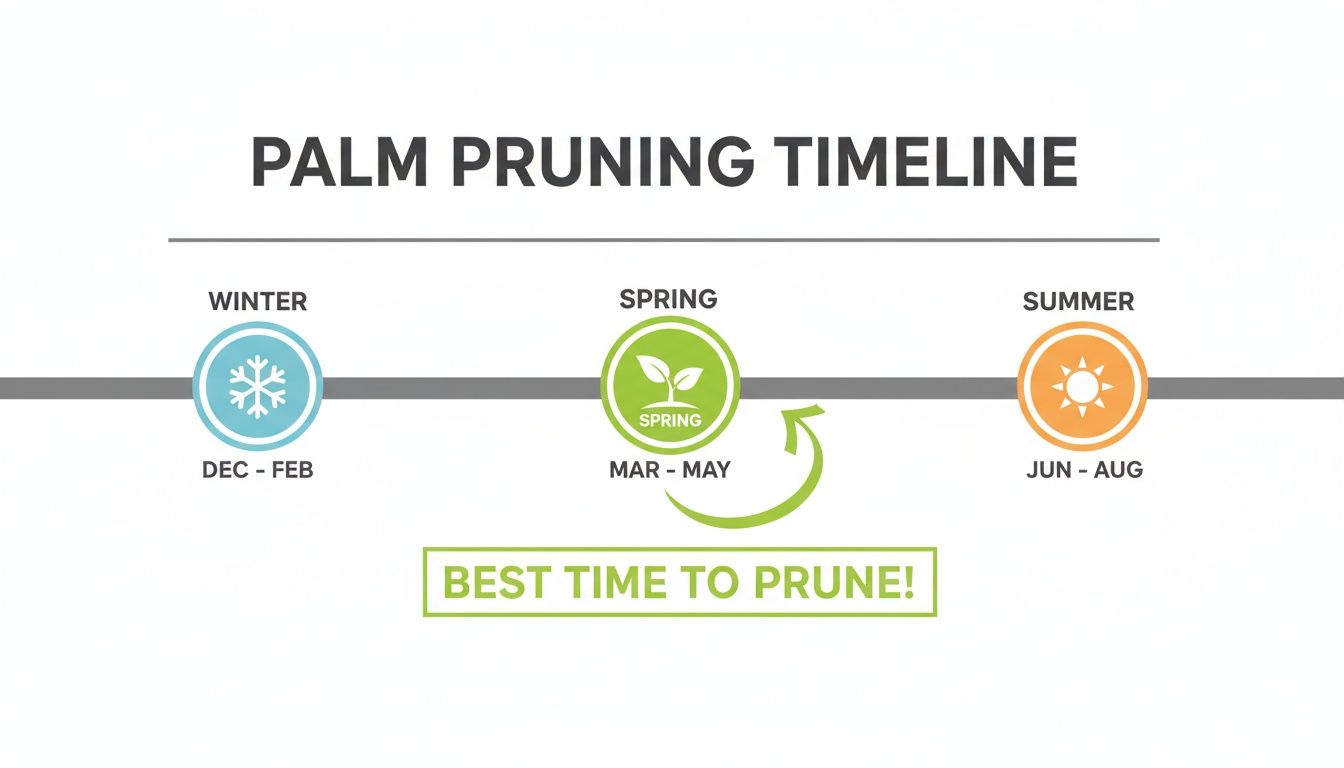
As the graphic shows, spring gives your palms the perfect conditions to heal. This proactive approach is a cornerstone of smart tree care in Peoria AZ and is essential for homeowners throughout the Valley, from Sun City to Gilbert.
For more tips on protecting your landscape from Arizona’s climate, learn how to prepare your trees for the summer heat in our blog.
Signs Your Palm Tree Needs Professional Attention
Your palm trees will tell you when they need help. Ignoring the signs is like ignoring your car’s check engine light—it often leads to more significant and expensive problems. A watchful eye can help you spot issues early, long before a monsoon storm turns a small problem into a major hazard.
The most obvious signal is a thick, brown “skirt” of dead, hanging fronds. This isn’t just an eyesore; it’s a fire hazard and a five-star hotel for pests. Other clues, like yellowing leaves or fronds drooping near power lines, are also clear calls for action.
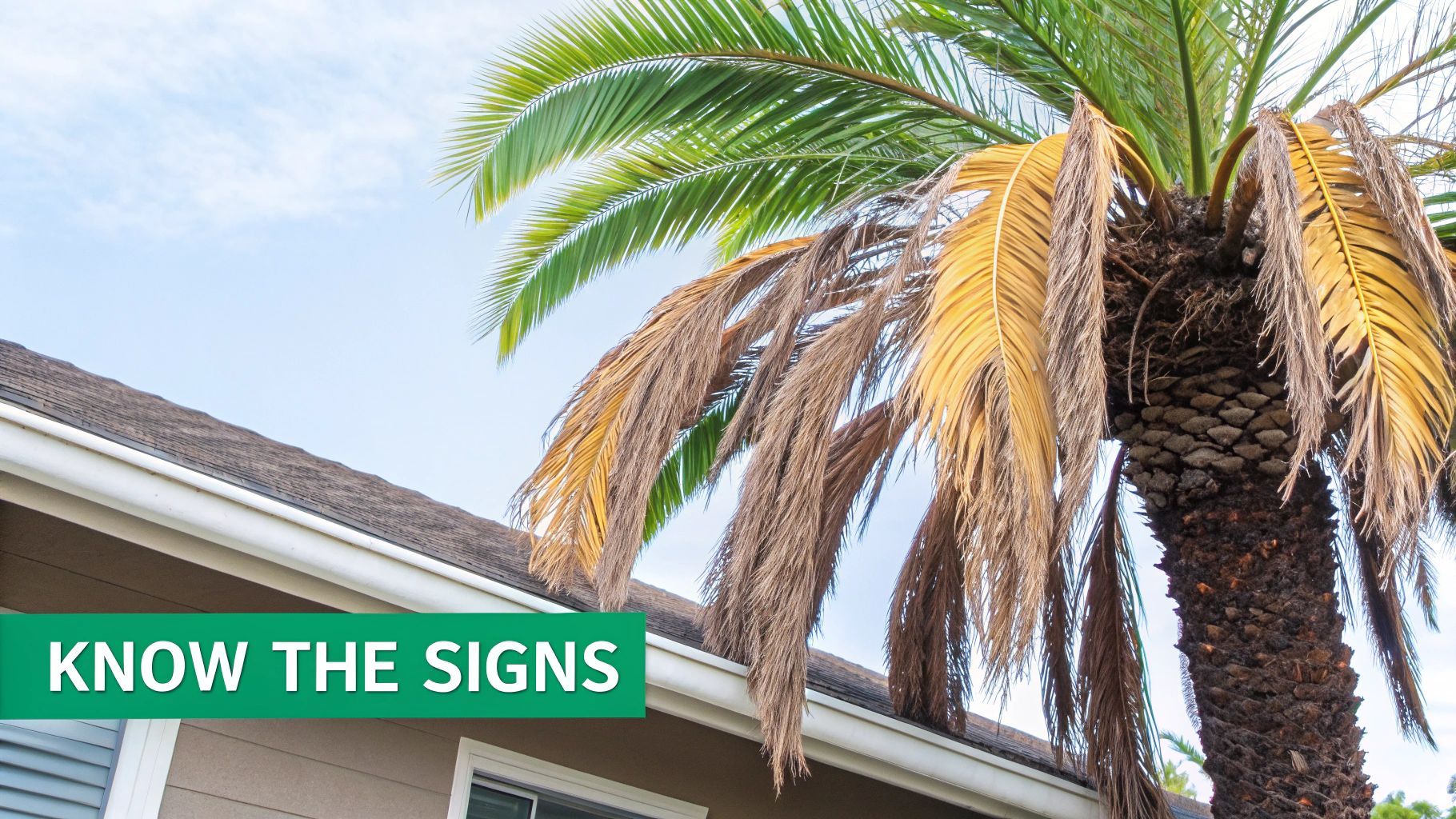
So, what should you look for? Here are the key signs your tree needs professional attention:
- A Thick Brown “Skirt”: This collection of dead, hanging fronds chokes out healthy growth and creates a perfect habitat for scorpions and rats.
- Yellowing or Discolored Fronds: Leaves turning yellow can indicate a nutrient deficiency (like a lack of magnesium or potassium) that needs to be addressed.
- Drooping or Broken Fronds: Are branches scraping your roof, blocking a walkway, or dangerously close to power lines? This is a clear safety hazard that requires immediate trimming.
- Visible Pests or Nests: If you see signs of rodents or large insect nests, it’s time to clean up the palm and remove their hiding places.
- Flower and Fruit Stalks: Once they dry out, these stalks add unnecessary weight and can break off, creating a mess and a potential hazard.
If you spot any of these red flags, it’s time to consult an expert. A professional can safely address these issues and diagnose any underlying health problems. Learn more about identifying hazardous trees before the storm hits in our detailed guide.
The Risks of Improper Pruning Techniques
Palm tree trimming is a science. While it may seem straightforward, incorrect techniques can cause severe, long-term damage. One of the most common and harmful mistakes we see is the “hurricane cut” or “rooster tailing,” where overzealous trimmers remove healthy green fronds, leaving only a few sticking straight up.
This aggressive over-pruning essentially starves the palm. Green fronds are the tree’s solar panels, creating food through photosynthesis. Removing them weakens the tree’s structure, thins the trunk, and makes it far more likely to snap during a monsoon storm. It’s a costly mistake that turns a beautiful asset into a liability.
Other risks of poor pruning include:
- Inviting Pests and Disease: Ragged cuts or stubs left too long create entry points for fungal infections and wood-boring insects.
- Causing Nutrient Deficiencies: Removing yellowing fronds prematurely robs the palm of essential nutrients it reabsorbs to fuel new growth.
- Damaging the Trunk: Using climbing spikes can leave permanent wounds in the trunk, making it vulnerable to decay.
Proper pruning requires a deep understanding of tree biology and strict safety protocols. To learn more about the potential hazards of doing it yourself, review our guide on why DIY tree pruning could be risky. A small investment in professional tree service Phoenix AZ can prevent significant costs and headaches later.
Why Hiring an ISA Certified Arborist is a Smart Investment
When it comes to palm care, who you hire is just as important as when. While a handyman might offer a lower price, the risks associated with improper tree work are immense. An ISA Certified Arborist brings a level of expertise that protects your tree, your property, and your peace of mind.
Certified arborists understand palm tree biology. They know exactly which fronds to remove and how to cut them to promote healing and prevent disease. They are also trained in the latest safety standards, which is crucial when working at height with heavy equipment.
Hiring an uninsured trimmer for a job like tree trimming Sun City AZ is a major gamble. If an accident happens, you could be liable for property damage or injuries. A professional, fully insured company like Shady Deal Tree Service protects you from all liability. Safety is paramount; a professional approach prevents tragic accidents. You can discover more insights about tree worker safety on phi.org to understand the importance of proper training.
An arborist’s expertise is a commitment to the science of tree care. To understand the rigorous training involved, read our guide on what it means to be a certified arborist. That dedication is what protects your valuable landscape assets.
How Proactive Palm Care Protects Your Property Value
Think of professional palm maintenance as an investment, not an expense. A neglected palm can quickly become a financial liability, leading to emergency tree removal Scottsdale AZ after a storm, costly pest control, or repairs to a damaged roof.
Conversely, proactive care pays for itself many times over. Well-maintained palms significantly boost your home’s curb appeal and can increase its market value, a fact supported by various landscape studies. Regular trimming helps you avoid the five-figure cost of removing a mature dead tree and replacing it.
Here’s how smart maintenance saves you money:
- Prevents Property Damage: Removing heavy, dead fronds before monsoon season stops them from becoming projectiles that can damage windows, cars, or roofs.
- Avoids Costly Pest Infestations: A clean palm trunk deters scorpions and rodents, saving you hundreds on extermination services.
- Protects Tree Health: Proper pruning prevents diseases that could kill your palm, saving you from the high cost of removal and replacement.
Investing a small amount in an annual professional trim prevents much larger, unexpected expenses. It’s the definition of “an ounce of prevention is worth a pound of cure.” See the difference professional care makes in our gallery of completed projects.
Steps to Prepare Your Palms for Monsoon Season
Every Arizona resident knows monsoon season brings powerful winds and sudden downpours. For homeowners from Avondale to Cave Creek, preparing your palm trees is a critical safety measure. An untrimmed palm acts like a giant sail, catching the wind and putting immense stress on the trunk, increasing the risk of it snapping or uprooting.
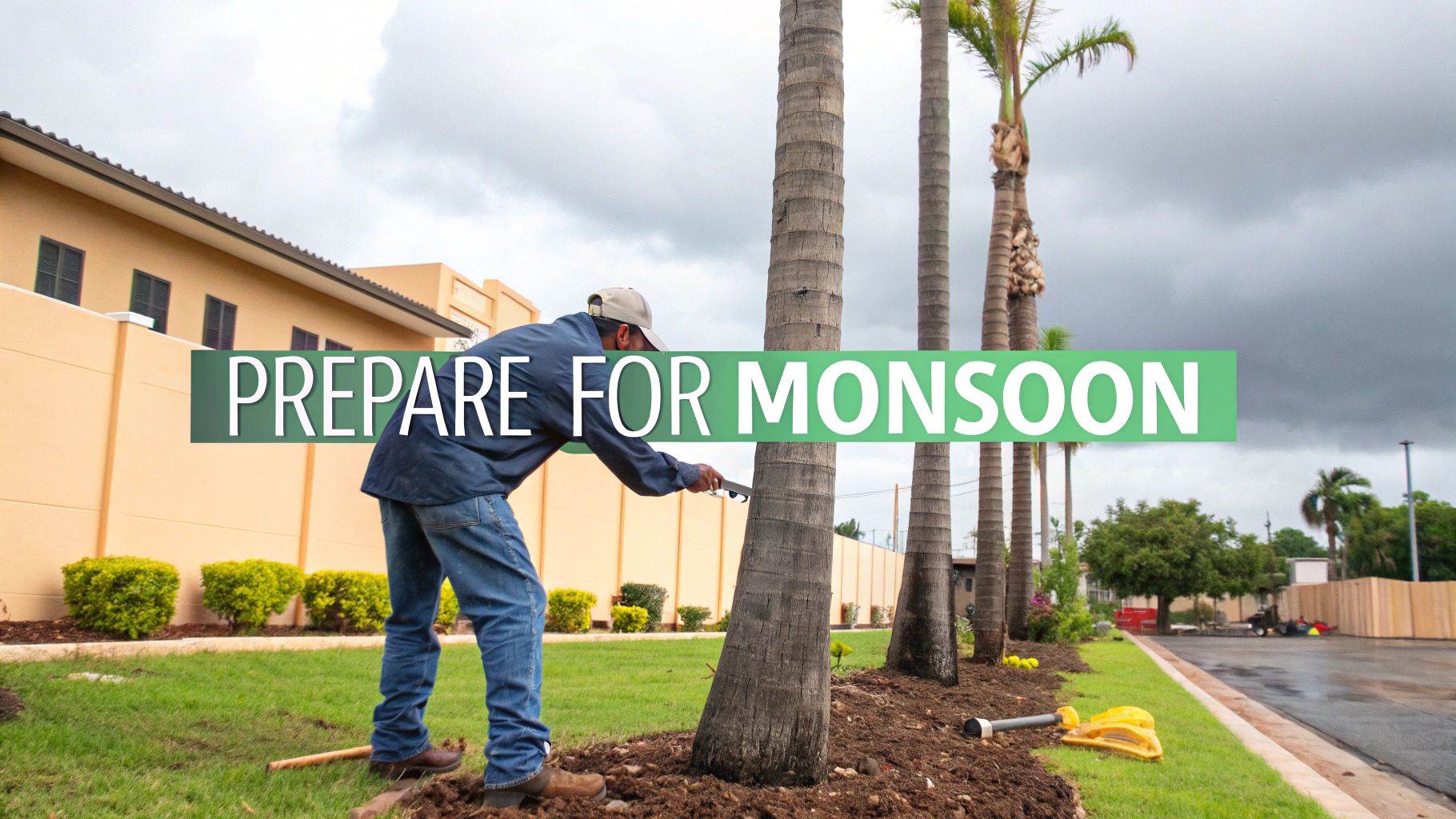
Here are the essential steps to prepare for monsoon season:
- Schedule a Professional Inspection: Have an ISA Certified Arborist assess your palm’s structural integrity. We are trained to spot weak points that could fail in high winds.
- Remove Hazardous Fronds: Pruning dead, dying, and broken fronds is the most important step. This thins the canopy, allowing wind to pass through the tree rather than push against it, drastically reducing strain.
- Check for Pests and Disease: A weakened tree is more likely to fail in a storm. An arborist can identify and treat issues that compromise the tree’s strength.
Taking these steps protects your property from thousands of dollars in potential storm damage. To learn more, check out our expert tips on how to monsoon-proof your trees. Staying prepared is a key part of any Arizona’s seasonal home maintenance checklist.
Frequently Asked Questions About Palm Tree Pruning
As local tree care experts, we get a lot of questions from homeowners. Here are answers to some of the most common ones.
How often should I trim my palm trees in Arizona?
For most palm species in the Phoenix area, an annual trimming is sufficient. The best time is late spring (April-June) to ensure the tree is clean and strong before monsoon season. Some faster-growing species may benefit from a second light trim, but over-pruning should always be avoided.
Is it bad to cut green fronds off a palm tree?
Yes, you should never cut healthy, green fronds. These fronds are the tree’s source of energy, and removing them weakens its overall health and structural integrity. This harmful practice, often called a “hurricane cut,” can lead to a thinner trunk that is more susceptible to snapping in high winds.
Can I prune my own palm tree?
We strongly advise against it. Palm pruning can be dangerous due to the risk of falling fronds, working at heights, and encountering pests like scorpions. For your safety and the health of your tree, it’s always best to hire a professional, insured tree service with the right equipment and expertise.
What is palm tree skinning and is it necessary?
Palm skinning involves removing the dead frond bases (or “boots”) from the trunk for a smooth, clean appearance. While primarily cosmetic, it also eliminates hiding spots for pests like scorpions and roof rats. Whether skinning is appropriate depends on the palm species and your aesthetic preference.
At Shady Deal Tree Service, our ISA Certified Arborists are dedicated to keeping trees healthy, safe, and beautiful. We proudly serve homeowners throughout the Phoenix Metro Area, including Avondale, Buckeye, Carefree, Cave Creek, Chandler, El Mirage, Gilbert, Glendale, Goodyear, Litchfield Park, Mesa, New River, Paradise Valley, Peoria, Phoenix, Scottsdale, Sun City, Sun City West, Surprise, Tempe, and Youngtown.
Ready to schedule your service?
Call 623-703-2536 or visit https://shadydealtreeservice.com to schedule your free tree service estimate today.