
Has one of your beautiful Palo Verde trees started looking a little… off? Or maybe you’ve noticed the branches on your favorite shade tree seem thinner than you remember, especially with monsoon season just around the corner. For homeowners across the Phoenix Metro Area, a healthy landscape is a point of pride, but our intense climate can put serious stress on our trees, leaving them vulnerable to disease.
Think of this guide as your first step to becoming a tree health detective. We’ll walk you through the subtle (and not-so-subtle) clues your trees send when they’re in distress. Spotting these signs of tree disease early is the key to protecting your property, preventing costly damage, and avoiding the need for a full tree removal down the road.
Signs Your Tree Needs Professional Attention
When you’re checking on your trees, you don’t need to be an expert to spot trouble. You just need to know where to look. Think of it like a quick wellness check that gives you the confidence to know when it’s time to call for backup from a trusted local expert.
A quick visual scan can tell you a lot. Here are the key signs your tree needs a professional look:
- Discolored or Dying Leaves: Widespread yellowing, strange spots, or leaves dropping way too early in the season are often the first signs of stress or infection.
- Cracked or Peeling Bark: A tree’s bark is its armor. Deep cracks, peeling sections, or weird growths like mushrooms can signal anything from a fungal infection to a serious structural problem.
- Thinning Canopy: If you can see more daylight through the branches than you used to, it often points to hidden root trouble or a systemic health issue.
- Dead or Hanging Branches: These are not just ugly—they are a major safety hazard, especially during high monsoon winds.
- Sudden Leaning: If your tree is leaning in a new direction, or you see soil pulling away from its base, its structural integrity could be compromised.
A healthy tree is a safe tree. Being proactive, especially before and after our intense monsoon season, is one of the smartest things a homeowner can do for their property’s safety and value.
This map breaks down the three main areas to check when you’re giving your tree a once-over.
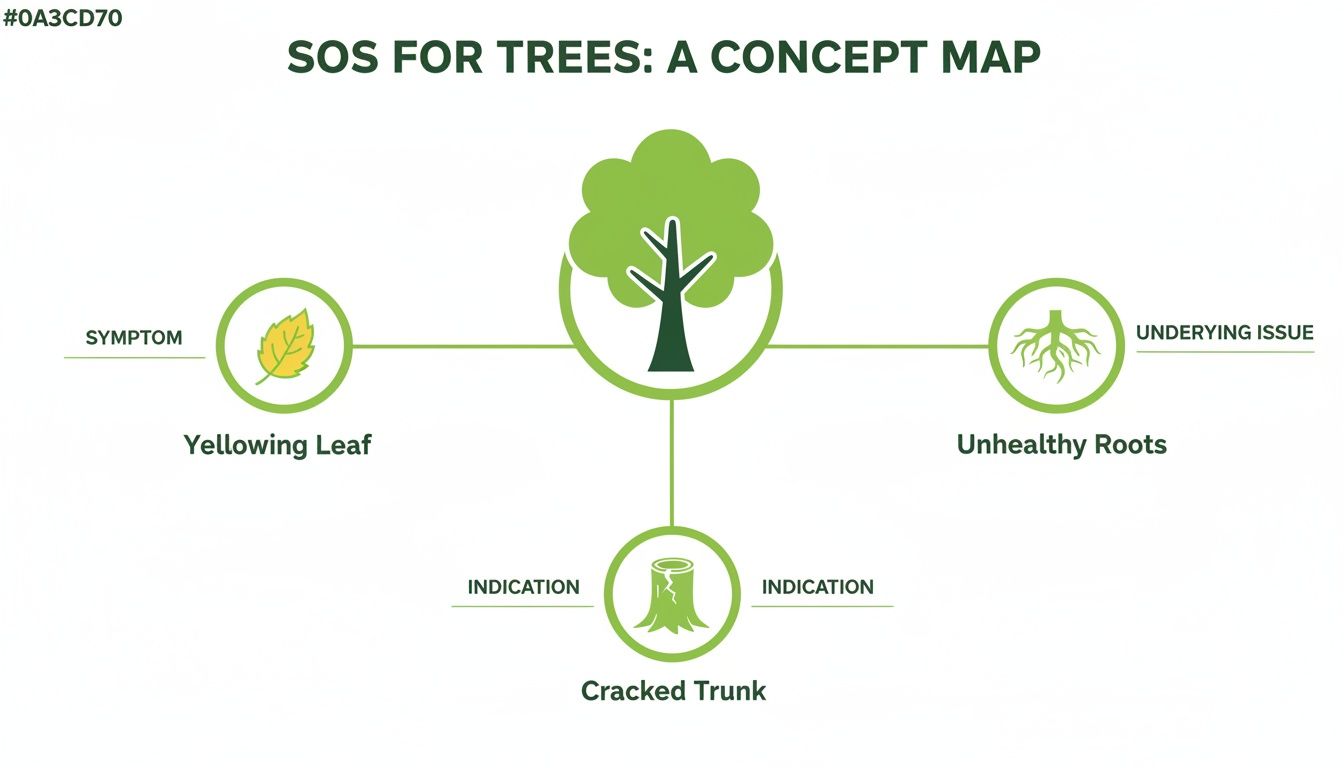
It’s all connected. A problem with the roots can show up in the leaves, and an issue with the trunk can affect the entire system. At Shady Deal Tree Service, we know that a sick branch is often just a symptom of a much deeper issue. Our team serves homeowners across the Phoenix Metro Area—from Goodyear to Surprise to Sun City West—with expert care that gets to the root of the problem.
What the Leaves Are Trying to Tell You
A tree’s leaves are its personal health dashboard, often flashing the very first warning signs that something is wrong. When you know what to look for, you can catch problems early, long before they become a real threat. For homeowners in Mesa and Chandler, learning to read these signals is the key to keeping your landscape looking its best.
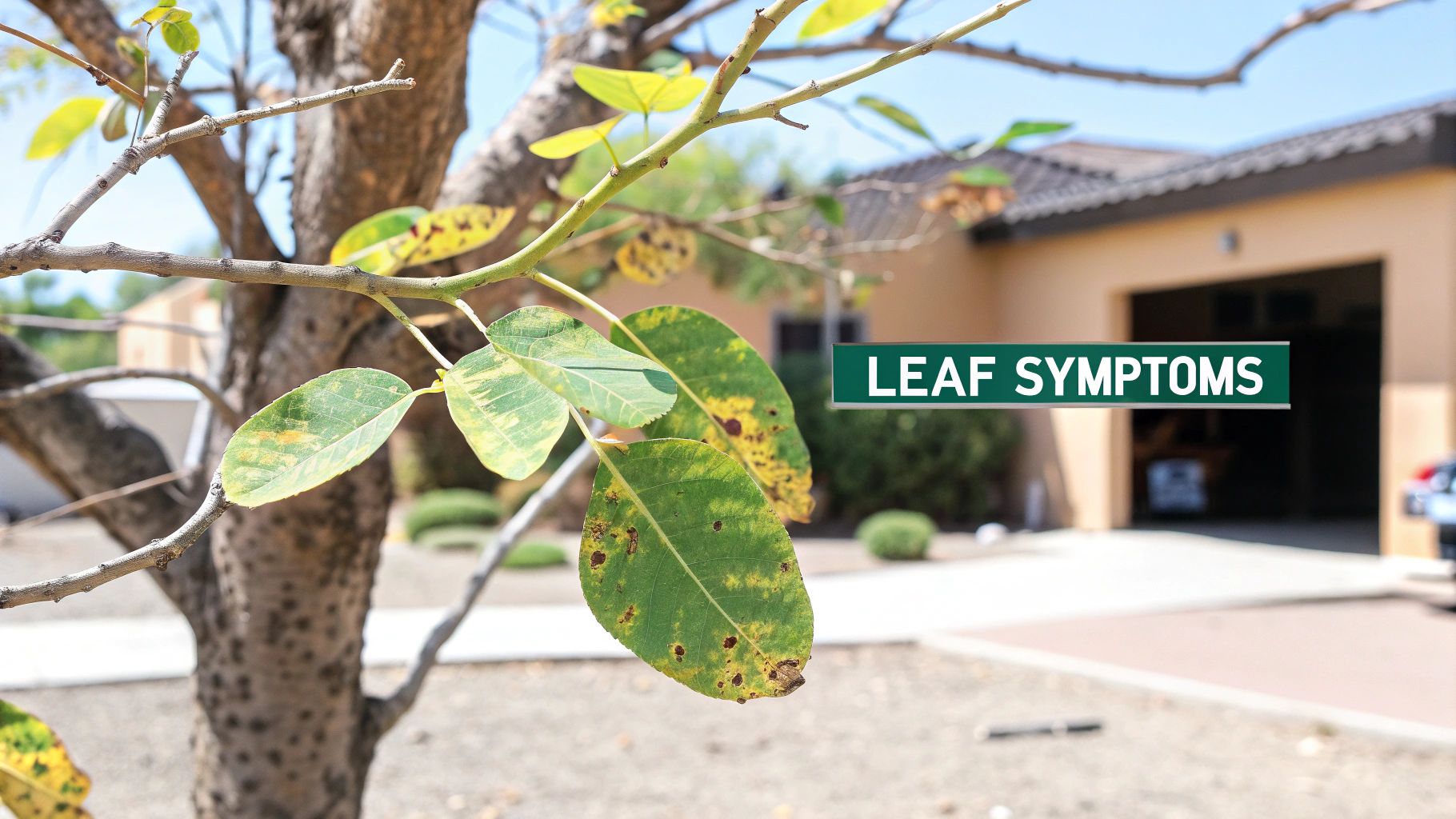
Think of it this way: a healthy, deep green leaf is like a tiny solar panel, busy turning sunlight into energy. When disease, pests, or stress interrupt that job, the visual evidence is impossible to miss.
Yellowing Leaves a Sign of Chlorosis
One of the most common issues homeowners notice is yellowing leaves, a condition called chlorosis. It’s a sign that the leaf isn’t producing enough chlorophyll—the pigment that makes it green and powers its growth.
Imagine trying to bake a cake without any flour; the tree is missing a key ingredient and simply can’t function correctly. This deficiency is almost always a symptom of a deeper problem.
Common Causes of Yellow Leaves in Arizona:
- Nutrient Deficiency: Our alkaline desert soil can make it tough for trees to absorb essential nutrients like iron or manganese, resulting in pale, yellow leaves with distinctly green veins.
- Water Stress: Both too much and too little water can trigger yellowing. Waterlogged soil suffocates the roots, while bone-dry soil starves them.
- Soil Compaction: Heavy foot traffic or nearby construction can pack the soil down, blocking roots from getting the oxygen and water they need to survive.
Spots, Blemishes, and Powdery Mildew
If yellowing leaves are a sign of malnutrition, then spots and strange textures are like a rash—a clear indicator of an active infection. Fungal and bacterial diseases often show up as distinct blemishes on the leaf’s surface.
Keep an eye out for these tell-tale signs:
- Dark Spots or Lesions: These can be black, brown, or tan and might have a defined border. Diseases like anthracnose create blotchy spots that cause leaves to curl up and drop way too early.
- Powdery Film: A white or grayish powder dusting the leaves is the classic calling card of powdery mildew. This common fungus loves humidity, especially after a good monsoon storm.
- Rust-Colored Pustules: Small, raised orange or reddish-brown bumps, usually on the underside of leaves, often point to a rust disease, another type of fungal invader.
Just like a single cough doesn’t mean you have a serious illness, a few spotted leaves aren’t always a catastrophe. However, when these symptoms spread rapidly across the canopy, it’s a clear signal that your tree is under attack and needs professional help.
Wilting Drooping or Curling
Wilting leaves are one of the most urgent signals a tree can send. It’s a cry for help that says the tree is extremely thirsty, but the cause isn’t always just a lack of water. Wilting means the tree’s internal plumbing system is failing to get water up to the leaves.
This can happen for a few critical reasons:
- Root Rot: Overwatering can lead to fungal root rot, which destroys the very roots responsible for absorbing water. The tree is literally drowning from the ground up.
- Vascular Wilts: Aggressive diseases like Verticillium wilt attack the tree’s vascular tissue (the xylem), clogging the tiny channels that transport water. The leaves wilt and die even if the soil feels moist.
- Severe Heat Stress: During those brutal Phoenix heatwaves, some trees simply can’t pull water up fast enough to keep pace with evaporation, causing them to wilt temporarily.
Recognizing these leaf symptoms is the first step, but a proper diagnosis is what really matters. That’s where a professional eye makes all the difference. An expert can distinguish between a simple nutrient issue and a fast-moving fungal disease. Sometimes, strategic fixes like corrective tree pruning to improve air circulation in Phoenix are all it takes to stop the spread and get your tree back on track.
Decoding Damage on Bark and Trunks
Think of a tree’s bark as its armor. It’s the first line of defense against pests, harsh weather, and disease. When that armor gets breached, the tree becomes incredibly vulnerable—much like how a deep cut on our skin can lead to a serious infection. That’s why paying close attention to the trunk and branches is a crucial part of spotting trouble early.
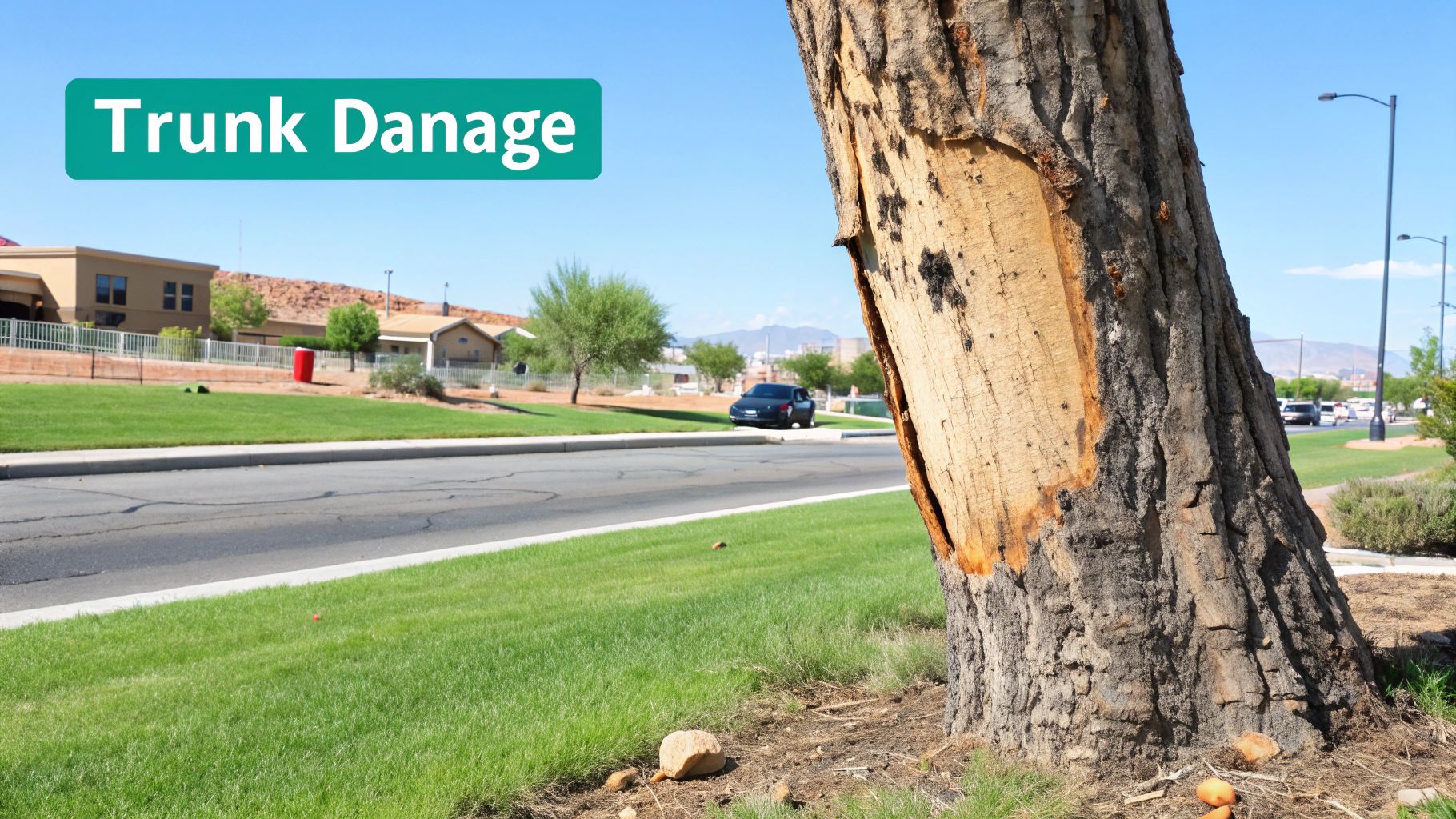
This protective layer does more than just shield the tree. It houses the vital circulatory system that moves water and nutrients from the roots all the way up to the leaves. Any damage here compromises that entire system, essentially cutting off the tree’s lifeline.
Cankers and Cracks: A Direct Threat to Health
Some of the most alarming symptoms show up right on the tree’s trunk. They’re often a clear sign that a disease has already taken hold and is actively attacking the tree’s core structure.
Cankers are basically dead zones on the bark that look like sunken sores. They’re usually caused by fungi or bacteria that sneak in through a wound, maybe from an improper pruning cut or a bump from a weed whacker. A canker kills the tissue underneath, blocking the flow of nutrients and seriously weakening the branch or trunk.
Deep cracks or splits in the bark are another huge red flag. While a little shallow cracking is normal as a tree grows, deep fissures that expose the inner wood are dangerous. They create an open door for wood-boring insects and decay fungi, which can hollow out the tree from the inside out and turn it into a major safety risk. If you see deep cracks, it’s time to call for a tree removal Scottsdale AZ consultation to assess the hazard.
In places like Scottsdale and Paradise Valley, young, thin-barked trees are especially vulnerable to sunscald during our intense summers. This “sunburn” kills sections of bark, creating the perfect entry point for canker-causing diseases.
Unusual Growths and Oozing Sap
Beyond obvious wounds, you should also be on the lookout for anything that seems out of place on the trunk. These growths and substances are often the outward signs of an internal battle.
- Fungal Growths: If you suddenly see mushrooms or shelf fungi (also called brackets) popping up on the trunk or near the base, it’s a classic sign of internal decay. The fungus you see is just the “fruit” of a much larger organism that is likely feeding on the tree’s wood.
- Oozing Sap or “Bleeding”: Some trees naturally seep a little sap, but if you notice excessive or discolored ooze, it could signal stress or disease. This is often a symptom of bacterial infections or damage from boring insects.
- Peeling or Flaking Bark: When large sections of bark start peeling away or flaking off, it usually means the tissue underneath has died. This can happen from environmental stress, disease, or a physical injury.
These structural issues are more than just cosmetic blemishes; they point to significant health problems that can compromise the tree’s stability. Identifying them early is critical because a structurally unsound tree is a hazardous one.
At Shady Deal Tree Service, our ISA Certified Arborists are trained to decode these complex signs. We provide expert tree care in Peoria AZ, and across the valley from Glendale to Gilbert, diagnosing the root cause of trunk and bark damage. We can tell you if a tree is treatable or if its structural integrity is too far gone, making it a candidate for safe removal.
Investigating the Unseen World of Roots
Many tree health crises start silently, underground. While we’re busy looking at the leaves and branches we see every day, the real problem is often hiding right under our feet. A tree’s root system is its lifeline, responsible for pulling in every drop of water and nutrient it needs to survive our harsh Arizona climate. When the roots are in trouble, the entire tree suffers.
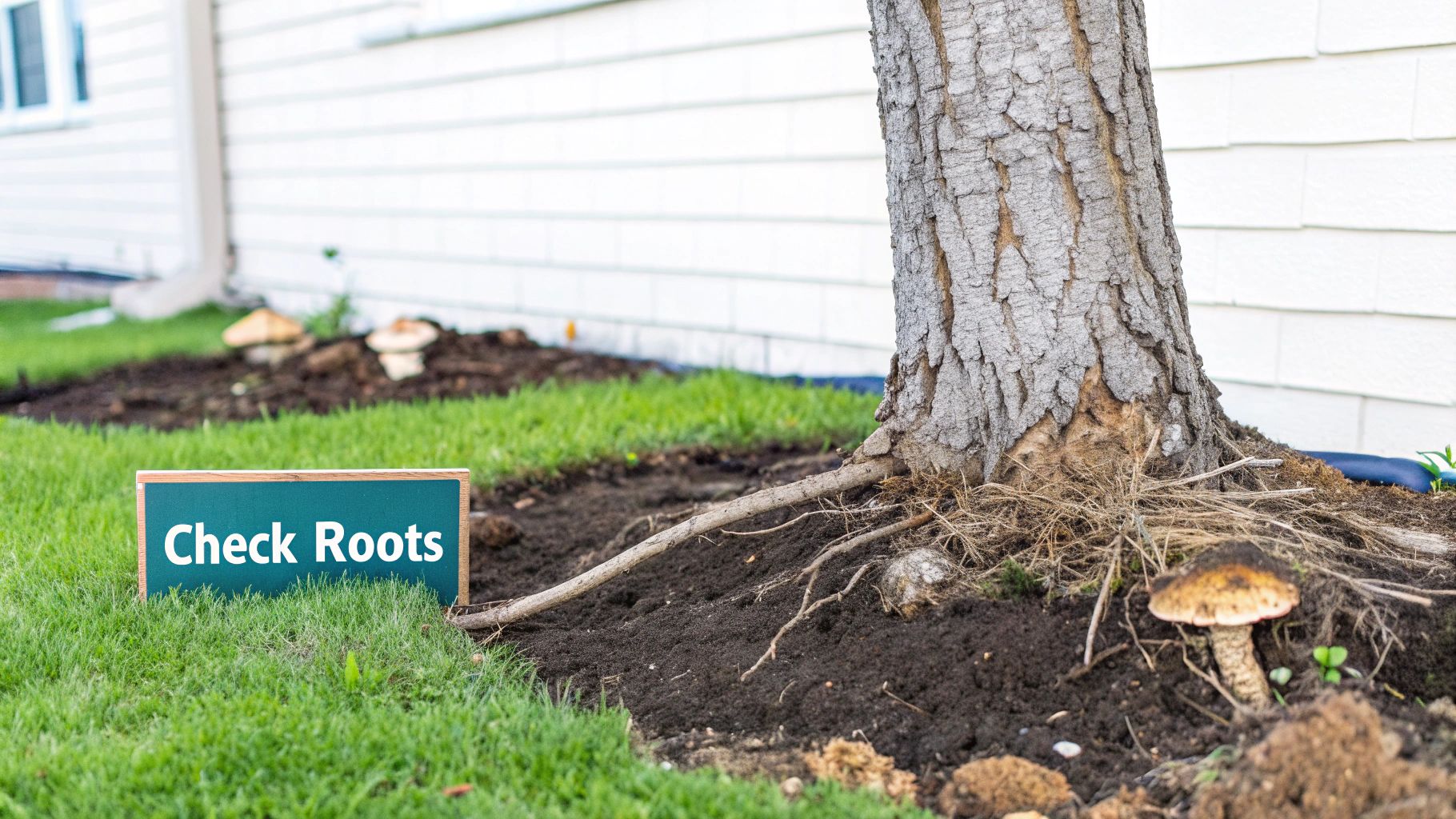
Since you can’t see the roots directly, you have to learn to spot their distress signals above ground. Think of it like a detective story—the clues are there if you know what you’re looking for.
Above-Ground Clues to Underground Problems
A compromised root system just can’t support a healthy, full canopy. The damage might not show up overnight, but eventually, the stress will become impossible to ignore.
- Thinning Canopy: If you notice you can see a lot more daylight through the leaves than you used to, or the tree just looks sparse, that’s a huge red flag. It’s a sign the roots aren’t sending up enough resources to support full foliage.
- Stunted Growth: Are the new leaves smaller than last year’s? Are the branches not extending as far as they should? This lack of vigor is often one of the very first signs of root decline.
- Dieback from the Top Down: When branches at the very top of the tree start to die off, it’s a classic symptom of root issues. The tree is essentially abandoning its furthest limbs first to conserve energy for its core.
When a tree’s foundation is failing, the entire structure is at risk. Root problems don’t just affect a tree’s health—they compromise its stability, making it a potential hazard during monsoon season.
Ground-Level Evidence of Root Distress
Beyond the canopy, you can also find clues right at the base of the tree. These signs often point directly to what’s happening in the soil.
Mushrooms Near the Base
One of the most definitive signs of root rot is the appearance of mushrooms or other fungal bodies on the soil near the trunk or on exposed roots. These fungi are feasting on decaying wood, which means the root system is actively breaking down. It’s a bad sign.
Soil Pulling Away from the Trunk
If you see a gap forming between the base of the trunk and the surrounding soil, it may mean the root structure is decaying and losing its grip. The tree might even have a slight lean that wasn’t there before, signaling a critical loss of stability. This is a serious problem that requires an immediate professional assessment. You can find more helpful information on our tree service blog.
Common Causes of Root Damage in Arizona
Here in places like Avondale, Buckeye, and Litchfield Park, certain local conditions often lead to root problems.
Improper irrigation is a major culprit. Many well-intentioned homeowners overwater their trees, creating a waterlogged environment where root rot fungi thrive. This suffocates the roots, preventing them from absorbing oxygen and leading to a slow, silent death.
Soil compaction is another common issue. Heavy foot traffic, parking vehicles near a tree, or recent construction can squeeze the air out of the soil, making it impossible for roots to breathe and expand. A healthy root system is the key to a thriving landscape, and recognizing these unseen threats is the first step toward protecting your valuable trees.
When Pests Are a Symptom, Not the Problem
Seeing bugs crawling all over your tree might make you want to grab the nearest can of pesticide, but it’s best to hold on for a minute. More often than not, those pests are just messengers delivering bad news about your tree’s health—they aren’t the actual source of the problem.
Think of it this way: a healthy, thriving tree has a strong immune system. It can naturally fight off most invaders. But a tree that’s already stressed out from drought, poor soil, or an old injury? That tree is an easy target. It’s basically hanging a giant neon sign that flashes “Vacancy!” for every opportunistic pest in the neighborhood.
Pests as Opportunistic Predators
Insects like borers and aphids are basically nature’s cleanup crew, and they’re hardwired to seek out weak and struggling plants. A stressed tree actually sends out chemical signals that these pests can pick up from a distance, pretty much inviting them over for a meal. This is why you might see one tree in your yard absolutely covered in pests while its healthy neighbor just a few feet away is completely untouched.
Some common signs that opportunistic pests have moved in include:
- Tiny Holes in the Bark: These often look like little exit wounds, left behind by wood-boring insects that have been tunneling inside the tree.
- Fine Sawdust (Frass): If you see a sawdust-like powder collecting at the base of the tree or tucked into bark crevices, that’s the waste product of boring insects.
- Sticky Residue on Leaves: That clear, sticky stuff is called honeydew, and it’s left behind by sap-sucking insects like aphids. It often leads to sooty mold, a black fungus that grows right on top of the honeydew.
These insects aren’t just an eyesore; they can speed up a tree’s decline in a hurry. To really solve the problem for good, you have to address the underlying stress.
Insects as Disease Couriers
Some pests are more than just freeloaders—they’re active disease spreaders. They act like tiny couriers, carrying fungal spores or bacteria from an infected tree to a healthy one as they move around and feed.
This is a huge concern for homeowners in communities like El Mirage, Youngtown, and Cave Creek, where trees are often planted close together. All it takes is one infected tree to start a neighborhood-wide problem if the insect vectors aren’t managed.
A sudden insect infestation is often your tree’s way of telling you that it’s been struggling for a while. Treating only the bugs without addressing the tree’s actual health is like taking a cough drop for pneumonia—it masks the symptom but ignores the disease.
Even certain pests, like voles, can cause serious damage to roots and bark that either mimics or worsens disease symptoms. For a deeper look into these specific rodents, you can check out guides on identifying and controlling voles.
This holistic view is exactly why we at Shady Deal Tree Service provide effective tree service Phoenix AZ homeowners can trust. We don’t just spray for bugs; we diagnose and treat the entire tree ecosystem to get to the root of the issue.
Your Proactive Guide to Preventing Tree Disease
Now that you know how to spot the signs of a sick tree, let’s talk about the best part: prevention. The easiest way to fight tree disease is to stop it from ever getting a foothold in the first place. This is about shifting your mindset from reaction to prevention—creating an environment where your trees don’t just survive our harsh Arizona climate, they thrive in it.
Think of it like building a strong immune system for your trees. A healthy, vigorous tree is far less likely to be taken down by the opportunistic pests and pathogens that are always on the lookout for a weak target.
Benefits of Regular Trimming and Pruning
Proper pruning is so much more than just making your trees look tidy; it’s a critical health check-up. By having a certified arborist selectively remove the right branches, you can seriously boost a tree’s natural defenses against disease. Here are the key benefits of services like tree trimming Sun City AZ:
- Improves Air Circulation: Thinning out a dense canopy lets air flow freely through the leaves. This helps them dry out faster after our monsoon downpours, making it much harder for common fungal diseases like powdery mildew to move in.
- Removes Weak Spots: An expert can spot and remove dead, damaged, or weakly attached branches. These are the open doors that boring insects and pathogens use to invade your tree.
- Directs Strong Growth: Corrective pruning helps a tree develop a sturdy, stable structure. This reduces the risk of branches snapping during high winds, which creates large, vulnerable wounds that invite trouble.
- Prevents Property Damage: Removing overgrown branches prevents them from damaging your roof, scraping siding, or interfering with power lines, saving you from costly repairs.
Prepare Your Trees for Monsoon Season
Here in the Phoenix Metro Area, monsoon season brings high winds and heavy rains that can turn a weak tree into a serious hazard. Proactive care is essential for protecting your property.
- Schedule a Pre-Monsoon Inspection: Have a certified arborist assess your trees for weak branches, cracks, or signs of decay that could fail in a storm.
- Trim and Thin the Canopy: Proper trimming allows strong winds to pass through the branches instead of pushing against the tree like a sail, reducing the risk of it toppling over.
- Check the Root Zone: Ensure the soil around your tree isn’t overly saturated or eroded, which can weaken its anchor in the ground.
- Clear Away Debris: Remove any dead branches or yard waste that could become dangerous projectiles in high winds.
The Power of Protective Mulch
Mulch is one of the most effective—and affordable—tools in your tree care arsenal. A simple layer of organic mulch provides a whole host of benefits that directly fight the stressors that lead to disease.
Applying a 2-4 inch layer of wood chips or other organic material around the base of your tree acts like a protective blanket. It insulates the soil from blistering summer heat, dramatically reduces water evaporation, and smothers the weeds that steal precious water and nutrients.
Crucial Tip: Always keep mulch at least 6 inches away from the tree trunk itself. Piling mulch directly against the bark, a practice often called “volcano mulching,” traps moisture and creates the perfect breeding ground for fungal diseases and rot. Don’t do it!
By combining smart watering, professional pruning, and proper mulching, homeowners in Paradise Valley and Peoria can cultivate a truly resilient landscape. For a deeper dive into building a long-term strategy, check out our guide on preventative tree care planning to avoid costly removals. This proactive approach is the best way to keep your trees healthy, beautiful, and safe for years to come.
Frequently Asked Questions About Arizona Tree Health
How often should I trim my trees in Arizona?
For most mature shade trees in the Phoenix area, trimming every 2-3 years is a good rule of thumb to maintain their health and structure. However, faster-growing species like Palo Verdes or Mesquites may need annual attention, while palm trees have their own specific trimming schedule. A professional assessment can give you a precise recommendation.
How can I tell if my palm tree is sick?
For palms, the fronds tell the story. Look for fronds that are yellowing or browning prematurely, a thinning crown, or unusual holes in the trunk. A foul smell coming from the trunk is a major red flag for rot. These symptoms mean it’s time to call a palm tree trimming Glendale AZ specialist before the damage becomes permanent.
Can a tree recover from a disease on its own?
While a healthy tree can sometimes fend off minor stress, significant fungal or bacterial diseases almost always require professional intervention. Early detection and treatment, such as targeted pruning or soil therapies, give your tree the best chance for a full recovery and prevent the problem from spreading.
What is the most common tree disease in the Phoenix area?
Texas Root Rot is one of the most destructive and widespread diseases we encounter, affecting a wide variety of landscape trees. Other common issues include sooty canker and various forms of root rot, which are often caused by improper watering. Regularly inspecting your trees is the best way to catch these problems early.
One of the most effective ways to diagnose and address complex tree health issues is to consult with a trained professional. To understand what qualifications to look for, you can learn more about what a certified arborist is and how their expertise protects your trees.
At Shady Deal Tree Service, we are your local experts dedicated to helping you keep your corner of Arizona healthy, safe, and beautiful. We proudly serve homeowners throughout the Phoenix Metro Area, including Avondale, Buckeye, Carefree, Cave Creek, Chandler, El Mirage, Gilbert, Glendale, Goodyear, Litchfield Park, Mesa, New River, Paradise Valley, Peoria, Phoenix, Scottsdale, Sun City, Sun City West, Surprise, Tempe, and Youngtown.
Call 623-703-2536 or visit shadydealtreeservice.com to schedule your free tree service estimate today.