
Is that towering palm tree in your backyard looking a little stressed after a recent storm, or are its overgrown fronds getting dangerously close to your roof? As a Phoenix Metro Area homeowner, you know our beautiful palms face unique challenges, from monsoon winds to scorching summer heat. Keeping them healthy, safe, and beautiful isn’t just about curb appeal—it’s about protecting your property.
This guide is your local playbook for palm tree care, built from years of on-the-ground experience helping homeowners from Scottsdale to Goodyear. Forget the generic advice; caring for a palm in Mesa is worlds away from caring for one in a milder climate. Our intense sun, alkaline soil, and powerful monsoon season demand a specialized approach. With a bit of local know-how, you can ensure your palms not only survive but thrive.
We proudly serve homeowners throughout the Phoenix Metro Area, including Avondale, Buckeye, Carefree, Cave Creek, Chandler, El Mirage, Gilbert, Glendale, Goodyear, Litchfield Park, Mesa, New River, Paradise Valley, Peoria, Phoenix, Scottsdale, Sun City, Sun City West, Surprise, Tempe, and Youngtown.
Smart Watering and Fertilization for Desert Palms
In Arizona, keeping a palm tree healthy boils down to two things: deep watering and the right nutrients. It’s a classic mistake we see homeowners make—giving their trees frequent, shallow sprinkles of water. That just encourages weak, surface-level roots that get absolutely scorched by the heat.
To build real drought resistance, the goal is always deep, infrequent soaking. This simple technique trains the roots to grow downward in search of moisture, creating a strong anchor and a much more resilient tree. This is true all across the Phoenix Metro Area, from Avondale to Paradise Valley, where consistent hydration is non-negotiable.
Mastering Deep Watering Techniques
During the peak of summer, a deep soak every 7 to 14 days is usually all an established palm needs. The best way to do this? Lay a soaker hose or drip system around the tree’s root zone and let it run slowly for several hours. You’re aiming for the water to penetrate at least two to three feet into the soil. Once the weather cools off in the fall and winter, you can pull back to a deep watering session once every 3 to 6 weeks.
Feeding Your Palm the Right Nutrients
Water is only half the battle. Our local alkaline soil is often short on essential micronutrients that palms crave—especially potassium (K), manganese (Mn), and magnesium (Mg). This deficiency is the number one reason we see those dreaded yellow or frizzled fronds.
To combat this, use a slow-release, palm-specific fertilizer. Look for a formula with a high potassium content and those crucial micronutrients. A healthy, well-fed palm is its own best defense against pests and diseases. Providing the right nutrients at the right time is the most proactive step you can take to ensure long-term vitality. For a complete guide on prepping your yard for growth, take a look at our essential tips for spring tree care.
The Right Way to Handle Palm Tree Trimming
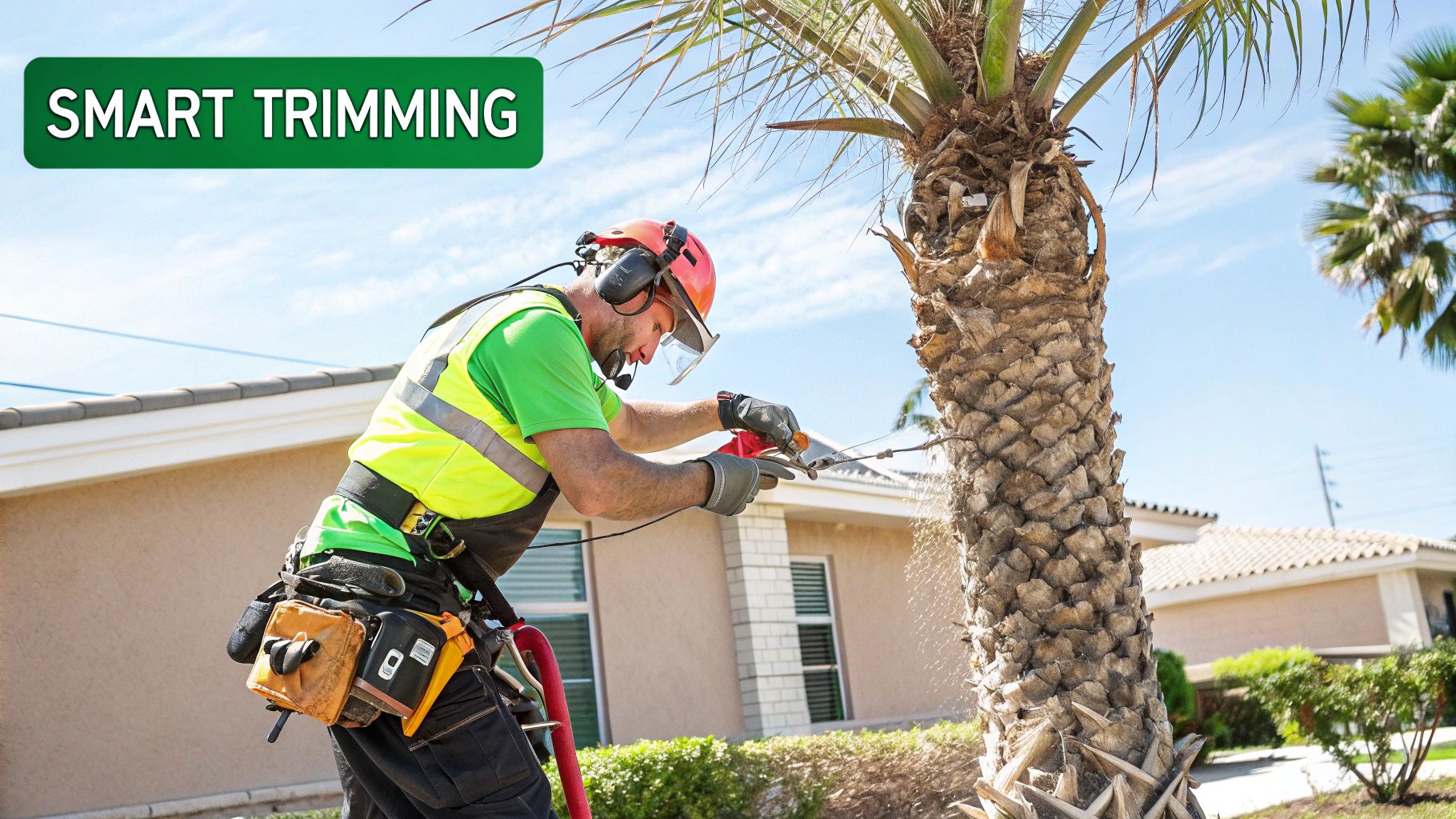
It’s a huge myth that palm trees need constant, aggressive trimming. In reality, over-pruning does more harm than good, putting the tree under serious stress. The art of proper palm trimming is less about hacking away and more about protecting the tree’s long-term health and your safety.
The goal is to carefully remove only what’s necessary: dead or dying brown fronds, heavy fruit stalks, and any fronds that have become a hazard. Those green fronds are the tree’s powerhouse, converting sunlight into energy. Cutting them off weakens its entire structure over time.
Benefits of Regular Trimming and Pruning
Proper trimming isn’t just about looks; it’s a vital part of responsible tree ownership. This is especially true for services like palm tree trimming in Glendale AZ, where we focus on both aesthetics and safety.
- Boosted Curb Appeal: A well-maintained palm has a clean, symmetrical look that instantly elevates your property.
- Pest and Rodent Eviction: That thick skirt of dead fronds is the perfect hiding spot for scorpions, rats, and other pests. Regular cleaning eliminates their habitat.
- Enhanced Safety: Dead fronds are heavy and can fall without warning during high winds, posing a risk to people, cars, and your roof. Removing them is a critical safety step.
- Improved Tree Health: Removing dead material allows the tree to direct its resources toward healthy new growth and prevents the spread of potential diseases.
For homeowners in Peoria, Scottsdale, or anywhere across the Valley, professional tree care in Peoria AZ, is the best way to ensure the job is done safely and correctly. Learn more in our guide on mastering tree trimming with these essential tips for homeowners.
Keeping Your Palms Safe from Arizona Pests and Diseases
Even the most well-cared-for palm can run into trouble with pests and diseases. The key is knowing what to look for so you can stop a small issue before it becomes a big one. A healthy, resilient palm starts with proper watering and fertilizing, which creates an environment where pests and diseases don’t want to settle in.
Signs Your Tree Needs Professional Attention
Sometimes, it’s clear your tree needs more help than you can provide. If you notice any of these symptoms, it’s time to call an ISA Certified Arborist from a trusted tree service in Phoenix AZ for a professional inspection.
- A rapidly thinning canopy: If your palm is dropping fronds much faster than normal.
- Strange discoloration: Look for yellowing, browning, or streaks on the fronds that aren’t just part of the normal seasonal cycle.
- A “pencil-point” trunk: If the very top of the trunk starts to narrow dramatically, it’s a sign of severe stress or disease.
- Visible pests or damage: Obvious signs like boreholes in the trunk, large webs on the fronds, or mushrooms growing at the base.
- Leaning or cracking: Any sudden changes in the tree’s posture or visible cracks in the trunk are urgent warning signs.
Spotting a problem early can be the difference between saving your tree and needing a full tree removal in Scottsdale AZ. For more prevention tips, check out our guide on the top 5 pest control tips for spring.
Preparing Your Palm Trees for Monsoon Season
Every Arizona homeowner knows that feeling when monsoon clouds start gathering. For those with tall palms, a heavy, untrimmed canopy can act like a giant sail in high winds, creating a serious risk of the trunk snapping or the entire tree coming down. This is a real danger to your home, vehicles, and family.
Steps to Prepare for Monsoon Season
Don’t wait until the first dust storm is on the horizon. Proactive care is always better—and safer—than dealing with the aftermath of a fallen tree.
- Schedule a Professional Trim: This is the single most effective step. A skilled arborist will strategically thin the canopy to reduce its weight and wind resistance, a crucial service for tree trimming in Sun City AZ and surrounding areas.
- Inspect for Weaknesses: Walk your property and look for cracks in the trunk or any new leaning. These are warning signs that need professional assessment right away.
- Clear Away Loose Debris: Secure or remove loose items in your yard like empty pots, tools, and lightweight furniture that can become projectiles in high winds.
- Check Your Irrigation: Ensure your watering system is functioning correctly. A well-hydrated tree with deep roots is much more stable and less likely to fail during a storm.
Preparing for monsoon season isn’t just about protecting your trees—it’s about safeguarding your entire property. For a more detailed strategy, explore our expert tips to monsoon-proof your trees.
Frequently Asked Questions about Palm Tree Care
As local tree care experts serving the Valley, we get a lot of questions from homeowners. Here are answers to some of the most common ones.
How often should I trim my palms in Arizona?
For most common palms in the Phoenix area, like Queen Palms and Mexican Fan Palms, trimming once or twice a year is ideal. The best time is late spring to clean them up and reduce weight before monsoon season arrives. Over-pruning stresses the tree, so it’s important to only remove what’s necessary.
Why are my palm fronds turning yellow?
Yellowing fronds in Arizona usually point to a nutrient deficiency, typically a lack of potassium or magnesium due to our alkaline soil. It can also be a sign of overwatering. The best first step is to apply a slow-release, palm-specific fertilizer and ensure your soil has proper drainage.
Is it dangerous to trim my own tall palm tree?
Yes, trimming tall palm trees is extremely dangerous without professional training and equipment. The risks include falling fronds, electrocution from hidden power lines, and falls from significant heights. For your safety and the health of your tree, always hire a licensed and insured professional arborist.
Keeping your palms healthy and beautiful doesn’t have to be a guessing game. With a little local knowledge and professional support, you can ensure they remain a gorgeous, safe part of your Arizona landscape for years to come. From our Services to our About Us page, you can see our commitment to excellence.
Call 623-703-2536 or visit shadydealtreeservice.com to schedule your free tree service estimate today.