
As a homeowner in the Phoenix Metro Area, you’ve seen it happen. The sky darkens, the wind picks up, and suddenly you’re wondering if that huge branch hanging over your roof is ready for monsoon season. Or maybe you’ve noticed a tree getting a little too close to the power lines. This common concern always leads to the big question: how often should I actually be trimming my trees in this desert climate?
The answer isn’t a simple calendar reminder. It’s a bit of an art and a science, tailored to each tree’s species, age, and health. This guide is your roadmap to figuring out exactly what your landscape needs to stay healthy, safe, and beautiful. At Shady Deal Tree Service, we believe an educated homeowner is our best partner, and we’re here to share our local expertise.
Why a Regular Trimming Schedule is Your Property’s Best Friend
Figuring out the right trimming schedule can feel like a guessing game. Do you just wait until a branch snaps in a summer storm? Or do you trim them every single year like clockwork?
Here’s the thing: a proactive approach is always smarter—and safer—than a reactive one. Setting up a regular trimming cycle with a professional is one of the best investments you can make in your property’s safety and curb appeal. For homeowners everywhere from Peoria to Mesa, proper tree care is about so much more than just looking good. It’s a crucial part of protecting your home from the unique challenges our Sonoran Desert environment throws at us.
The Real Benefits of Regular Trimming and Pruning
A consistent trimming schedule, customized for the specific trees in your yard, offers huge advantages that go way beyond a tidy appearance. It’s just part of being a responsible property owner here in the Valley.
- Monsoon Preparedness: A properly thinned canopy lets those fierce monsoon winds pass right through instead of turning your tree into a giant, dangerous sail. This dramatically cuts down the risk of a tree toppling over or losing a massive limb, which can cause devastating damage.
- Enhanced Tree Health: Strategic pruning gets rid of the dead, diseased, or awkwardly crossing branches. This simple cleanup job improves air circulation and lets more sunlight in, which helps prevent nasty fungal growth and pest infestations. The result is a stronger, healthier tree.
- Increased Property Value: Healthy, well-maintained trees are a huge asset. They provide shade that can slash your cooling costs, give your home a major curb appeal boost, and increase its overall market value. An overgrown, hazardous tree, on the other hand, is just a liability waiting to happen.
- Safety and Protection: Those overgrown branches can do real damage—threatening your roof, scraping up your home’s siding, or creeping dangerously close to power lines. Regular trimming keeps these risks in check, preventing costly repairs and keeping your family and neighbors safe.
Understanding the why behind tree trimming is the first step. For a deeper dive, check out our guide on the essential tips for homeowners to get a better handle on the techniques involved. As your trusted local experts, we’re here to help, providing expert tree trimming in Sun City, AZ, and across the entire Phoenix Metro Area.
Establishing Your Arizona Tree Trimming Timetable
So, what’s the golden rule for tree trimming here in Arizona? For most of the mature shade trees you see across Phoenix, Scottsdale, and the surrounding communities, a professional trim every 3 to 5 years is the sweet spot.
This timeline strikes a perfect balance. It gives your trees plenty of time to heal and grow stronger between prunings while catching overgrown, weak, or hazardous branches before our next monsoon season rolls in.
Younger trees, on the other hand, are a different story. They benefit from more frequent attention, usually a lighter trim every 2 to 3 years. Think of it as preventative care—guiding their growth now to build a strong, stable structure for a long, healthy life.
Why This Schedule Works for Arizona Trees
A consistent trimming schedule is one of the best things you can do to maintain a tree’s structural integrity. Regular pruning doesn’t just look good; it improves sunlight penetration for your grass and landscaping below and drastically cuts down the risk of storm damage when those high winds hit.
This proactive approach is far less stressful—and less costly—than dealing with an emergency call after a heavy branch has already come crashing down.
The goal isn’t just to chop away at branches. It’s about promoting long-term vitality. Arborists know that the right frequency depends heavily on the tree’s species, its location on your property, and what you want to achieve. While you can do minor cleanup cuts more often, major work like crown thinning or removing large limbs needs to be spaced out to let the tree recover properly.
As the graphic shows, a healthy, mature Palo Verde has very different needs from a young, developing Mesquite. A one-size-fits-all approach just doesn’t work for tree care.
Your Quick Reference Trimming Guide
To make things a bit easier for homeowners in communities from Avondale to Cave Creek, we put together this quick-reference table. It outlines the generally recommended trimming frequencies for some of the most common trees we see here in the Valley.
General Tree Trimming Frequency Guide for Phoenix Homeowners
| Tree Type | Recommended Trimming Frequency | Primary Goal of Trimming |
|---|---|---|
| Mature Shade Trees (e.g., Mesquite, Palo Verde) | Every 3-5 years | Maintain structural integrity, remove deadwood, reduce storm risk. |
| Young Trees (All species) | Every 2-3 years | Encourage strong structure, guide growth, establish a healthy form. |
| Palm Trees (e.g., Queen, Fan) | Annually | Remove dead fronds (fire hazard), clear seed pods, maintain aesthetics. |
| Fruit Trees (e.g., Citrus, Fig) | Annually (typically in winter) | Stimulate fruit production, improve air circulation, control size. |
| Flowering & Ornamental Trees (e.g., Jacaranda) | Every 2-3 years (after blooming) | Shape for aesthetics, remove spent blooms, encourage new growth. |
Keep in mind, this is a general guide. An on-site evaluation by a certified arborist is always the best way to determine the precise needs of your trees. Things like proximity to your house, soil conditions, and any previous storm damage all play a huge role.
Planning ahead for the seasons is also crucial. You can learn more by checking out our guide on seasonal tree care essentials and fall maintenance tips, which offers deeper insights into getting your landscape ready for the cooler months. Ultimately, a regular timetable is a fundamental part of responsible property ownership that protects your investment, ensures safety, and keeps your landscape thriving.
Special Trimming Needs for Palms and Fruit Trees
While that standard 3-to-5-year trimming schedule works wonders for most of our shade trees, Arizona’s iconic palms and fruit trees play by a completely different set of rules. For any homeowner in the Valley, understanding their unique needs is the key to cultivating a landscape that’s not just beautiful, but also healthy and productive.
Think of it this way: trimming a Palo Verde or Mesquite is mostly about shaping and structural integrity. But for palms and fruit trees, the goals are far more specific.
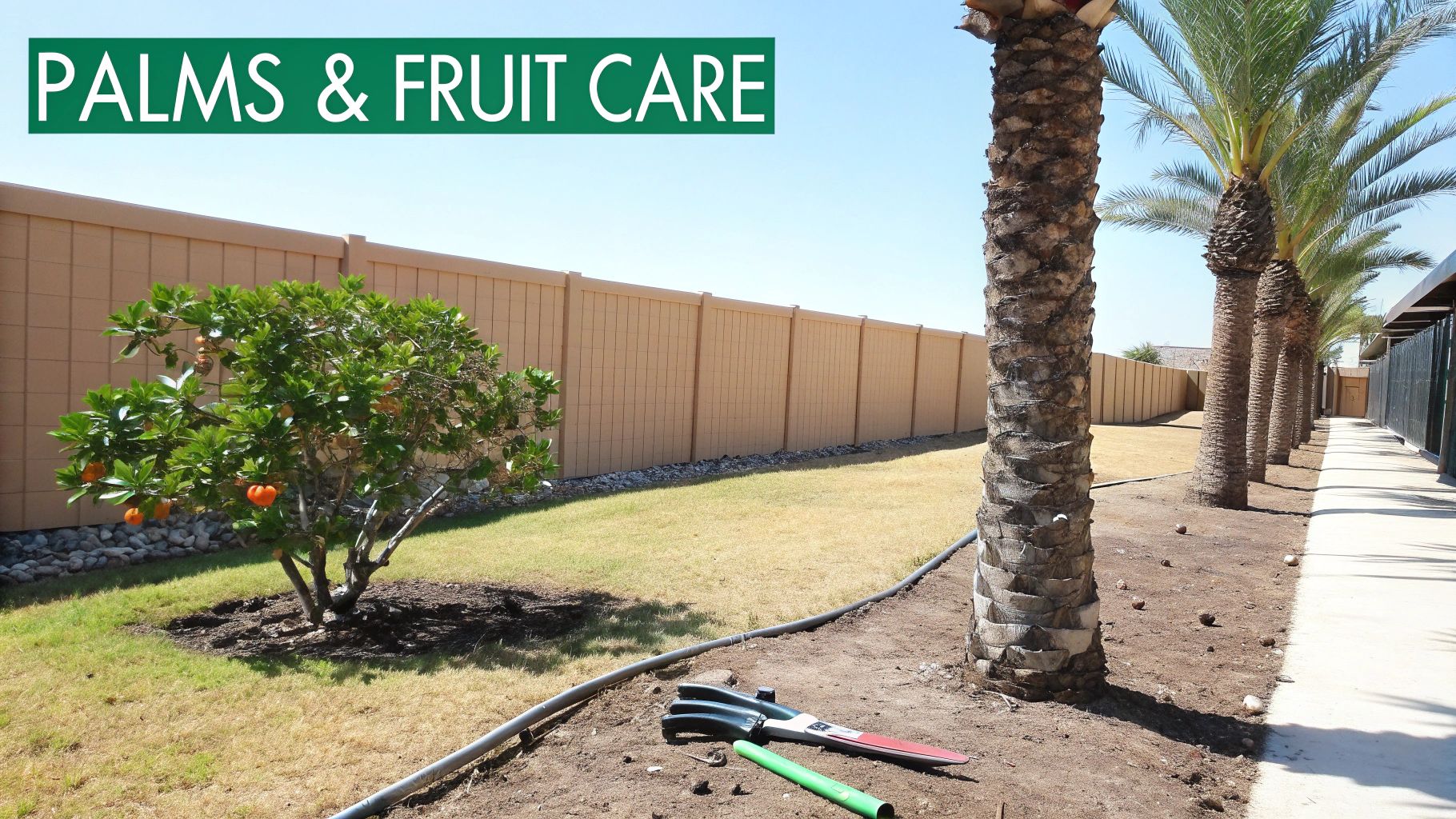
Caring for Arizona’s Palm Trees
When it comes to palm tree trimming in Glendale, AZ, the job is less about aesthetics and more about hygiene and safety. The main goal is to get rid of the dead or dying brown fronds, heavy seed pods, and any loose “boots” clinging to the trunk.
This isn’t just for curb appeal. Those dry, hanging fronds are a serious fire hazard and create the perfect five-star resort for scorpions, rats, and other pests you definitely don’t want setting up shop near your home.
The sweet spot for this service is annually in the late spring, right before the monsoon season decides to make its grand entrance. This timing clears out potential projectiles before the high winds hit, keeping your property much safer. If you trim too early in the year, you risk exposing the palm’s sensitive growing bud to an unexpected frost. For a deeper dive, check out our guide on the best time to trim palm trees.
Never let anyone “hurricane cut” your palm tree by removing healthy green fronds. This is a destructive practice that essentially starves the tree, robbing it of its ability to make food. It weakens the palm’s structure and leaves it wide open to disease and stress.
Pruning Fruit Trees for a Bountiful Harvest
Fruit trees—like the citrus, fig, and stone fruit trees popular in yards from Chandler to Surprise—also need annual attention. But here, the focus is all about one thing: maximizing your harvest and keeping the tree healthy for years to come.
For these trees, a strategic pruning in the late winter (usually January or February) is the way to go. This is when the tree is dormant, which minimizes stress and perfectly sets the stage for an explosion of growth come spring.
The goals of fruit tree pruning are very specific:
- Improve Sunlight Exposure: Opening up the canopy lets sunlight pour in and reach the inner branches. This is absolutely critical for ripening fruit evenly.
- Increase Air Circulation: A well-thinned canopy allows air to move freely, which drastically lowers the risk of fungal diseases that love damp, stagnant conditions.
- Stimulate Fruit Production: Pruning encourages the tree to push its energy into developing high-quality fruit instead of just growing more leaves.
Whether you have a row of majestic Queen Palms or a single lemon tree in your backyard, knowing their specific trimming schedules is everything. For expert tree care in Peoria, AZ, and across the Valley, tailoring the approach to the species is how you ensure your landscape remains a beautiful, safe, and valuable asset.
Signs Your Tree Needs Professional Attention Now
While a regular schedule is the best way to keep your trees healthy, sometimes a tree will send out an S.O.S. that just can’t wait. For homeowners across the Phoenix Metro, learning to spot these distress signals is key to preventing a bigger problem down the road. Ignoring these symptoms is a gamble, especially when monsoon winds are on the horizon.
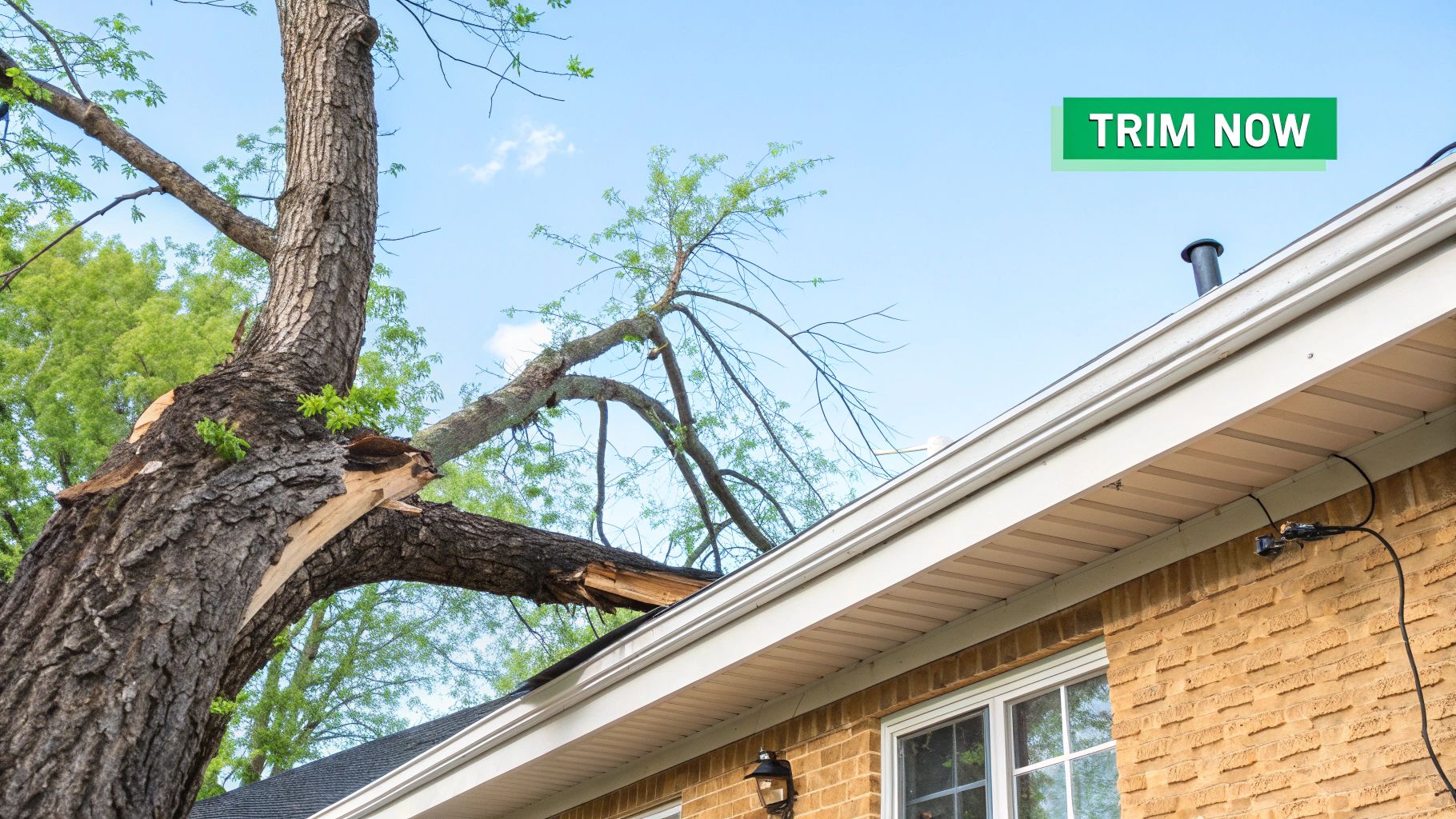
If you spot any of the following issues, it’s time to call a professional for an immediate evaluation.
- Dead, Dying, or Broken Branches: This is the most obvious and urgent warning sign. Look for branches that are brown, leafless, or hanging by a thread. They’re called “widow-makers” for a reason and can snap without any warning.
- Branches Touching Your Home or Power Lines: Any branch that’s making contact with your roof, siding, or electrical wires is a major hazard. A branch rubbing against shingles can wear them down and cause leaks, while one near a power line creates a severe risk of fire or electrocution.
- Deep Cracks or Splits in the Trunk: A significant crack in the main trunk or where a large limb connects is a sign of major structural weakness. This tree could be at high risk of splitting apart completely, especially during a storm.
- Signs of Disease or Pests: Be on the lookout for things like fungus growing on the bark, strange oozing sap, or big cavities in the wood. These are all symptoms that your tree is sick, and its internal structure might be compromised.
- A Sudden Lean: If a tree that was once straight is now leaning, or an existing lean has gotten worse, it could be a sign of root failure. This is an emergency, as the entire tree could topple over.
Catching these warning signs early is the difference between a routine trimming appointment and a costly emergency tree removal in Scottsdale, AZ. A quick walk around your yard once a month can save you thousands in potential damages.
Putting off a hazardous tree problem is a risk you don’t want to take. What starts as a simple cracked branch can quickly turn into a catastrophic failure during the next high-wind event. This is why protecting your property and family through proactive care is so important. At Shady Deal Tree Service, our team of certified arborists provides expert assessments to address hazards before they become emergencies.
Choose a Local Phoenix Tree Care Partner You Can Trust
Keeping your trees healthy and safe is a year-round job, and picking the right local team makes all the difference. The biggest takeaway is this: how often a tree needs trimming depends entirely on its species, age, and where it’s planted. Being proactive is always better than reacting to a fallen limb after a monsoon storm. This approach doesn’t just protect your property—it boosts its value and beauty for years.
As your local experts, we live and breathe the Sonoran Desert climate. At Shady Deal Tree Service, we’re proud to serve homeowners throughout the Phoenix Metro Area, including Avondale, Buckeye, Carefree, Cave Creek, Chandler, El Mirage, Gilbert, Glendale, Goodyear, Litchfield Park, Mesa, New River, Paradise Valley, Peoria, Phoenix, Scottsdale, Sun City, Sun City West, Surprise, Tempe, and Youngtown.
Expertise You Can Count On
Think of Shady Deal Tree Service as your property’s dedicated caretaker, making sure your trees are always a beautiful asset, not a potential liability. Our team has the knowledge and the right equipment to handle everything from a routine trim to a complex removal, all while keeping safety front and center.
Your trees are a living investment in your property. Partnering with a certified, insured professional protects that investment and gives you peace of mind, knowing the work is done safely and correctly.
When you hire a pro, you’re not just paying for their time—you’re investing in years of training and hard-won experience. A certified arborist understands the unique biology of every tree species and can spot problems long before they’re visible to the rest of us, saving you money and preventing future hazards. You can learn more about why hiring a certified arborist for tree trimming matters in our detailed guide.
Ready to create a safe and beautiful landscape with a partner you can rely on? We’re here to help.
Frequently Asked Questions About Tree Trimming
As your local Phoenix tree care experts, we get questions all the time from homeowners who just want to do what’s best for their landscape. Here are a few common ones we hear.
How often should I trim my trees in Arizona?
For most mature shade trees like Mesquites and Palo Verdes, trimming every 3 to 5 years is ideal. Younger trees benefit from more frequent light pruning every 2 to 3 years to establish a strong structure. Palm trees and fruit trees, however, require annual attention to keep them healthy and safe.
What is the best time of year to trim trees in Arizona?
The best time for most shade trees is during their dormant season in late fall or winter, which minimizes stress. However, palm trees should be trimmed in late spring to remove dead fronds before monsoon season. Of course, hazardous or broken branches should be removed immediately, regardless of the season.
Can I trim my own trees?
While trimming small shrubs or low-hanging branches can be a DIY task, anything involving a ladder, power lines, or large limbs should be left to professionals. Our insured experts at Shady Deal Tree Service have the specialized gear and safety training for professional tree service in Phoenix, AZ, ensuring the job is done right and without risk.
Why is topping a tree such a bad idea?
Topping is a harmful practice that chops off a tree’s main branches, creating weak, unstable regrowth that is prone to snapping in storms. It also creates large wounds that invite pests and disease. At Shady Deal Tree Service, we use industry-approved pruning methods that protect your tree’s health and natural beauty.
Your Partner for a Safe and Beautiful Landscape
At Shady Deal Tree Service, our key takeaways for Arizona homeowners are simple: be proactive, know the specific needs of your trees, and partner with a local expert you trust. A regular maintenance plan is the best way to protect your property, enhance its value, and enjoy a beautiful, thriving landscape for years to come.
Call 623-703-2536 or visit shadydealtreeservice.com to schedule your free tree service estimate today.